
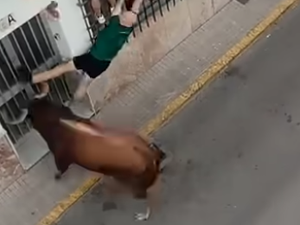
On September 7, 2025, during a votive party in Spain , tragedy struck when a spectator was fatally injured by a bull released at full speed. This incident has reignited debates about the safety of such events, particularly since this is not the first time the animal has caused harm to bystanders.
Just days following a fatal incident in the Gard region of France, the recent tragedy occurred in Ubrique, a town renowned for its traditional bullfighting events. Eyewitnesses report that a bull, part of the town’s Liberation of Toro del Gaymb , struck a spectator multiple times during the celebration. This event typically attracts hundreds of participants eager to witness the spectacle, but on this occasion, the excitement turned into chaos.
Chaos in Ubrique
The incident unfolded around 7 p.m. as the bull was set loose in the streets crowded with attendees. Unfortunately, the situation quickly deteriorated when the bull, running at full throttle, charged into the crowd. Reports indicate that the animal directly struck the victim—a man in his fifties—multiple times, illustrating the dangers present at such festivities.
Footage of the incident emerged shortly after the event, showing the bull repeatedly charging at the spectator, its horns directed forward. Frighteningly, the man attempted to save himself by grabbing onto the bars of a nearby window, but his efforts were in vain. Graphic images circulated on social media, showing the aftermath of the attack and the ensuing chaos in the streets.
After the bull trampled the man, it dashed away, leaving him motionless on the ground, a pool of blood forming around his head. Emergency responders arrived swiftly on the scene, and the victim was rushed to a local hospital. However, approximately one hour and fifteen minutes after the incident, the mayor announced that the man had succumbed to his injuries.
The Cultural and Safety Debate
The incident has raised serious concerns regarding the safety protocols in place for traditional events like the Liberation of Toro del Gaymb. Such events have long been a part of Spanish culture, attracting locals and tourists alike. However, as this tragedy demonstrates, the risks associated with bull releases are significant, leaving many to question the wisdom of continuing these practices without substantial safety measures.
Critics argue that better precautions should be implemented to protect spectators, particularly in light of this incident and previous occurrences involving injuries from running bulls. Some advocates for animal welfare argue that these spectacles should be re-evaluated entirely, suggesting that they constitute cruelty to the animals as well as to the participants.
In contrast, proponents of the tradition insist that with the right safety measures, these events can proceed without such dire incidents. It remains to be seen how the local government in Ubrique and other towns will respond to this latest tragedy, particularly in terms of future regulations surrounding bullfighting events. Calls for increased safety measures, including better crowd control and designated safe zones for spectators, are expected to gain momentum.
This latest event serves as a harsh reminder of the unpredictable nature of working with animals, particularly in a public spectacle. Bystanders often underestimate the risks involved, and this lack of awareness can have devastating consequences. As communities all over Spain continue to hold similar festivities, the safety of participants and spectators alike remains a critical focus for local governments and organizers.
In light of this tragic incident, it is crucial for communities to engage in serious discussions about the cultural significance of these events versus the potential risks they pose. Relaying ample safety information and possibly rethinking traditional practices may be the way forward, ensuring that the enjoyment of such festivities does not come at the cost of human life.