
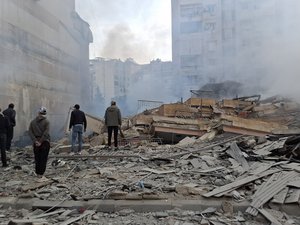
Injured in Bahrain
On Sunday, the ongoing conflict involving Iran, Israel, and the United States escalated further, resulting in three casualties in Bahrain. The Interior Ministry of the Gulf nation reported that missile debris caused injuries and material damage, particularly to a university in the Muharraq area. This incident marks the ninth day of a significant military confrontation, underscoring the regional ramifications of the hostilities attributed to Iran’s actions.
The ministry stated: “As a result of Iran’s blatant aggression, three people were injured, and material damage was caused to a university building in the Muharraq area after missile fragments fell.” This development highlights the increasingly dangerous ripple effects of the conflict beyond the immediate borders of Iran.
“Their Goal was the Fundamental Disintegration of Iran”
Amidst the escalating violence, the head of Iran’s Supreme National Security Council, Ari Larijani, made a provocative statement regarding the intentions of both the United States and Israel. According to Larijani, the geopolitical aim of these nations is to instigate the “disintegration” of the Islamic Republic. He asserted, “Their goal was (…) the fundamental disintegration of Iran.”
Larijani articulated a belief that the U.S. is implementing a strategy reminiscent of its prior maneuvers in Venezuela. He implied that Washington and its allies believed that a military strike would lead to swift control over Iran, similar to what they envisioned for Venezuela. Larijani remarked: “They thought it would be like Venezuela: they would strike, take control and it would be over. But now they are trapped.” This assertion suggests that the Iranian government perceives its adversaries as underestimating the complexities involved in destabilizing a nation with deep historical, cultural, and political roots.
Broader Implications
The exchange of hostilities not only affects the immediate nations involved but also has significant implications for global security and stability. The conflict may drive a wedge between various regional stakeholders, heightening tensions and potentially igniting more widespread unrest. While the original plan by the U.S. and its allies may have focused on a quick victory, the reality is proving to be far more complicated.
The Role of Regional Allies
As the situation escalates, regional allies and enemies are likely to take sides, further complicating the dynamics in the Middle East. Nations like Saudi Arabia and Turkey may feel pressured to respond, complicating international attempts to mediate a resolution.
Conclusion: A Call for Dialogue
In light of the increasing casualties and regional instability, there is an urgent need for diplomatic conversations aimed at de-escalating the conflict. The cycle of violence can only perpetuate more suffering and instability. Engaging in constructive dialogue may provide a path forward, enabling a more peaceful resolution to the ongoing crisis.
As the world watches this situation unfold, the international community must recognize the profound implications of a deepening conflict in Iran and strive to support diplomatic efforts that can bring about enduring peace and stability in the region.