
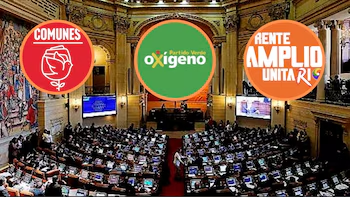
Major Shifts in Colombian Political Landscape: Comunes, Verde Oxígeno, Creo, and Frente Amplio Unitario Fail in Recent Elections
Loss of Representation in Congress
The 2026 Congressional elections in Colombia marked a pivotal moment, revealing significant changes in political representation. Several parties, including Comunes, Verde Oxígeno, Creo, and Frente Amplio Unitario, failed to secure enough votes to meet the electoral threshold. This shortfall not only resulted in lost seats but also jeopardized their legal status as political entities.
Overview of the Affected Parties
Comunes
Comunes, established following the Final Peace Agreement with the former FARC, faced its first elections without guaranteed congressional seats. Previously, during the legislative periods of 2018-2022 and 2022-2026, the party held five seats in both the Senate and the House as part of transition guarantees.
In the 2026 elections, Comunes allied with Fuerza Ciudadana, a movement led by Carlos Caicedo. Despite these efforts, the coalition garnered only 114,066 votes, significantly under the required threshold, threatening Comunes’ future as a viable political party.
Verde Oxígeno
The Verde Oxígeno party, known for its affiliation with former presidential candidate Ingrid Betancourt, experienced disheartening results. Previously, it retained its legal status through coalitions. However, in this election cycle, it opted to run independently. The result? A mere 27,688 votes, which again fell short of the necessary threshold for legal status.
Other Parties Facing Similar Fates
Other parties such as Creo and Frente Amplio Unitario also failed to surpass the threshold. Both received fewer than 400,000 votes, losing their chance for legislative representation. The unfavorable results underline the challenges faced by new and emerging movements in Colombia’s political arena, dominated by established coalitions.
The Competitive Nature of Colombian Elections
The elections revealed the importance of coalition-building in an increasingly competitive electoral environment. Emerging parties often struggle to gain traction against well-established competitors. For instance, while Comunes and Verde Oxígeno faltered, other parties like the National Salvation Movement successfully exceeded the threshold, obtaining 696,097 votes and securing three Senate seats.
Implications for Future Elections
These outcomes stress the need for political entities, especially newer parties, to adopt strategic alliances to ensure political survival. The 2026 elections serve as a wake-up call, urging parties to reassess their strategies and approach in an evolving political landscape.
Conclusion
The recent loss of seats and legal status for Comunes, Verde Oxígeno, Creo, and Frente Amplio Unitario underscores the shifting dynamics of Colombian politics. As traditional parties continue to consolidate power, the future of these emerging movements hangs precariously, demanding innovative strategies and robust coalitions. The journey ahead may be fraught with challenges, but the landscape is ripe for transformation in the years to come.