
CNTE Protests Escalate in Mexico City and Chiapas
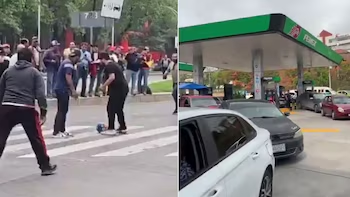
The ongoing protests by the National Coordinator of Education Workers (CNTE) have entered their fifth day, capturing attention in both Mexico City and Chiapas. On June 5, the group organized various activities, including a unique soccer challenge along the scenic Paseo de la Reforma. This playful approach comes just days before the widely anticipated World Cup 2026 event, adding layers of significance to their demonstrations.
Symbolic Takeover of Gas Stations in Chiapas
In Chiapas, members of section VII of the CNTE have staged a symbolic takeover of at least 13 gas stations in the capital, Tuxtla Gutiérrez. This act aims not only to draw attention to their grievances but also to facilitate access to fuel for local citizens. Reports indicate that individual drivers are allowed a free charge of 10 liters, while motorcyclists are limited to five liters, demonstrating the teachers’ commitment to community involvement amid their protests.
Paseo de la Reforma: A Stage for Protest
The CNTE’s activities are primarily concentrated in strategic locations on Paseo de la Reforma. Key points of interest include:
- Caballito Roundabout
- Intersection of Insurgents and Reforma
- Ahuehuete Glorieta
- Angel of Independence
At these sites, the protesters not only brought traffic to a standstill but also organized competitive soccer matches and racing events, turning the streets into arenas of both conflict and community spirit. These activities have sparked varied reactions on social media, igniting debates around the appropriateness of blending sport with activism.
The Government’s Response
The current protests have emerged amidst rising frustration over unfulfilled government promises under Claudia Sheinbaum‘s administration. As demonstrators chant slogans such as “If there is no solution, the ball will not roll,” they highlight the urgency of their demands.
Efforts for dialogue have been initiated, with discussions involving leaders from the Ministry of the Interior (Segob), the Ministry of Public Education (SEP), and the Institute of Security and Social Services for State Workers (ISSSTE). However, as of now, no concrete agreements have been reached, leading to continued public frustration from the teachers’ community.
Public Opinions on Social Media
The CNTE’s strategies have elicited mixed responses from the public, with some viewing the soccer events as a lighthearted distraction during serious protests, while others express indignation over what they perceive as trivializing their struggles. This division emphasizes the complexities surrounding social movements and the impact of grassroots activism on community sentiment.
Conclusion
The CNTE protests in Mexico City and Chiapas signify a growing tension between educators and the government, reflecting broader societal issues. As the protests persist, the blending of recreational activities into serious demonstrations may reshape the narrative of activism in Mexico, challenging conventional forms of protest while also energizing community participation.