
China’s Electric Car Revolution: A Boiling Market
For years, China has been meticulously crafting its strategy to dominate the electric car sector. Like a chef preparing a dish, the country has methodically combined all the necessary ingredients, gradually simmering the market until it reached a boiling point. With the right elements now in place, the time has come for China to present its masterpiece to the world.
And it doesn’t matter if some players get left behind in the process.
A Huge Market
China is the largest electric car market globally. More impressively, it also leads in terms of overall vehicle sales, regardless of technology. In 2024, approximately 23.5 million cars were sold in China, significantly surpassing the United States, which only reached around 16 million.
According to sources like Carnewschina, while sales were slightly lower at 22.9 million, the International Energy Agency (IEA) states that more than 11 million new energy vehicles —which include plug-in and hybrid cars—were sold this past year.
Over Low Heat
Until recently, European manufacturers were the dominant players in the Chinese market. However, local companies have steadily gained ground, embracing innovation and capturing the market’s imagination. For instance, BYD has overtaken Volkswagen to become a frontrunner. Among new energy vehicles, over 60% of sales now consist of electric cars, with Chinese manufacturers firmly at the helm.
This dominance can be attributed to a determined policy . European manufacturers were encouraged to enter the Chinese market under favorable conditions. However, to do so, they needed to partner with local manufacturers. This strategy allowed local companies to learn from their Western counterparts while benefiting from government subsidies, access to attractively priced labor, and low-interest loans.
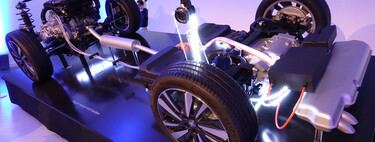
Moreover, the Chinese government maintains control over critical components of the supply chain, including semiconductors , rare earth elements, and battery production. This strategic positioning has made manufacturing costs significantly lower for local producers, thus allowing them to offer better products at competitive prices compared to foreign brands.

Fearless Ambitions
With the government heavily investing in its automotive industry, there is no hesitation in ramping up efforts to outpace Western competitors. State-driven purchase subsidies have ensured a consistent demand for electric and new energy vehicles, allowing China to stay ahead in this competitive landscape.
Nationalistic sentiments have further influenced consumer choice, shifting preferences toward local brands and making previous luxury symbols—often Western—seem outdated. Chinese consumers now perceive their vehicles not just as means of transportation but as multifunctional spaces, equipped with cutting-edge technology and entertainment systems.
Overcapacity Challenges
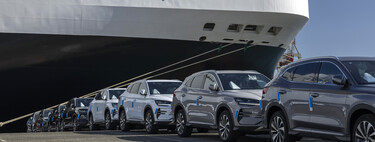
According to the Chinese Association of Automobile Manufacturers, 31.28 million vehicles were produced in 2024, with a nearly identical number sold. Importantly, a significant portion of this production was aimed at international markets. In 2023, China even surpassed Japan as the largest car exporter worldwide.
However, signs of market saturation are emerging. Recently, BYD announced a revision of its sales forecasts for 2025, scaling back from an ambitious plan to produce 5.5 million vehicles to approximately 5 million . This reflects the reality that with 80% of sales occurring within China, the market is beginning to struggle to absorb such quantities.
Pricing Wars
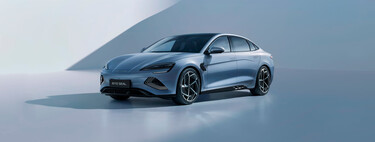
The difficulty in sustaining sales has ignited a fierce price war among manufacturers. In cities like Chengdu, it’s common to find cars sold with discounts of up to 60% . Brands like Audi, produced collaboratively with FAW, are particularly affected. This sharp decline in prices is eroding profit margins, especially for companies like BYD that have the resources to outlast smaller competitors.
<pRetailers have voiced their frustration, even asking manufacturers to halt shipments due to dwindling sales despite attractive discounts. The state has intervened by gathering manufacturers to explore solutions to manage inventory more effectively.

Market Implications
The current pricing turmoil has prompted comparisons to the real estate crisis , with industry leaders cautioning about potential catastrophic events similar to what happened with Evergrande. Some forecasts suggest that in five years, only a handful of the more than 150 electric vehicle brands in China will survive.
While some analysts predict that only five brands will remain, others are more optimistic, suggesting that about 15 could persist through to 2030. Regardless, the road ahead looks turbulent. Companies like Leapmotor are pivoting dramatically—from selling audio equipment to electric vehicles—while others struggle to maintain relevance in this rapidly evolving market.
The Future Landscape
The Chinese government continues to escalate its efforts in the automotive sector, positioning the nation as a leader in the global market for electric vehicles. However, challenges abound, from overproduction to a fierce pricing war that may leave many brands scrambling to stay afloat. Industry experts will continue to closely monitor the situation, offering insights on which brands may have the endurance to thrive in the coming years.
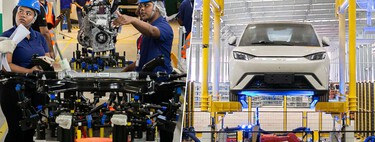
The best-positioned firms will most likely be those with substantial backing and resources. Brands like Xiaomi , SAIC , LEAPMOTOR , XPeng , and NIO stand out as compelling players in this rapidly changing landscape.
- Xiaomi: With a solid foundation in consumer electronics, Xiaomi has the financial flexibility to explore the automotive vertical, leveraging its extensive retail network.
- SAIC: As a state-owned enterprise, it has successfully acquired brands like MG and competes vigorously in the affordable market segment.
- LEAPMOTOR: Achieving production milestones faster than established firms like BYD and Tesla, it focuses on economical electric cars, appealing to a vast consumer base.
- XPeng: This brand, akin to Tesla, focuses on software as a defining feature, offering sleek, efficient vehicles in emerging markets.
- NIO: Despite significant financial challenges, NIO is known for innovative battery exchange systems and has captured consumer interest.
As the pressure cooker of the Chinese electric vehicle market reaches its peak, all eyes will be on the strategies employed by these companies to navigate the complex waters ahead.