
The Changing Landscape of the Chinese Drone Market
The Chinese market has long stood out as the most attractive option for purchasing drones due to its appealing combination of price and variety. Buyers can choose from ultra-affordable models costing around 30 euros to high-end, professional drones like the DJI Mavic 4 Pro , which can set you back over 2,000 euros . This extensive range has made China a go-to for drone enthusiasts and professionals alike.
However, this successful formula is now facing a new context . Recent reports from the Financial Times indicate that prices for components sourced from China are rising, in some cases doubling . Let’s explore the reasons and implications of this phenomenon.
Rising Component Prices
As noted, an increasingly challenging landscape has emerged. Multiple suppliers operating in China have begun to raise their prices for international clients. This shift, according to the British newspaper, is largely a response to the tightening of export controls imposed by Beijing on “sensitive components.”
This development occurs within a global framework marked by a trade war between the United States and China. Although some hostilities have calmed in recent months, uncertainty remains about the future course of events.
Key Components Under Scrutiny
One of the most affected elements by these restrictions is the thermal cameras used in drones. These cameras enable the detection of temperature differences and generate images in conditions of low visibility, such as at night, in fog, or smoke.
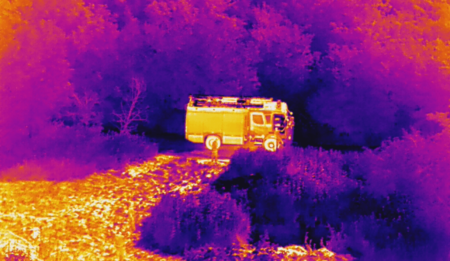
An image captured by a drone with a thermal camera
These cameras find application in both civilian (such as rescue operations or industrial inspections) and military contexts. The latter usage could be a driving factor behind the tightening of controls and the subsequent increase in export costs, as these cameras enable surveillance tasks under adverse conditions.
Comparing Strategies: US and China
While the tightening of controls from Beijing may appear to be a sudden response, it is neither an isolated nor a new strategy on the global stage. The United States has spent years restricting China’s access to specific products under the guise of “national security.”
A prime example is Huawei —in 2019, the Trump administration enacted a ban requiring U.S. companies to obtain licenses in order to provide certain technologies to the Chinese manufacturer. This measure has continued under President Joe Biden .
The Role of Drones in Modern Warfare
One key reason behind the Chinese controls is the military use of drones. In recent years, we’ve witnessed how consumer drones have become integral to military arsenals in conflicts like that of Russia and Ukraine .
The use of hundreds of drones in Ukrainian strikes on Russian bases, coupled with the mass production of low-cost explosive drones, illustrates that the line between civilian and military drones has blurred. This phenomenon likely explains why China is keen to control who it sells what to.
The Response from Europe and the U.S.
In response to China’s dominance, both Europe and the United States are taking measures. In the U.S., organizations like AUVSI have called for tax incentives and loans to facilitate a transition to domestic drones, particularly for security and public service sectors.
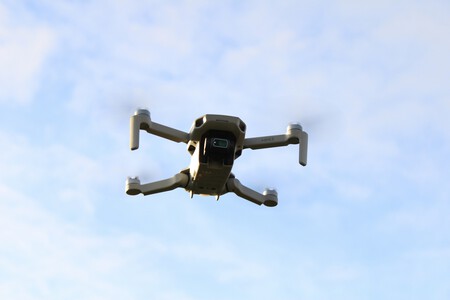
Moreover, substantial actions have been taken, such as the Pentagon’s inclusion of DJI on its list of “Chinese military companies,” prompting the manufacturer to engage in a legal battle to revoke this designation.
In Europe, initiatives like the Eurodrone program —developed jointly by France, Germany, Spain, and Italy—aim to reduce reliance on non-European manufacturers. Additionally, there are other programs like the European Defence Fund aimed at bolstering European capabilities.
The Impending Impact on Consumers
Currently, it is evident that accessing parts from China is no longer as easy or affordable as it once was. Restrictions and controls are inflating costs for key components, a trend that is already being felt by buyers around the globe.
While it’s uncertain whether this trend will ultimately affect the prices of everyday drones purchased online or in stores, indications strongly suggest that the market as we knew it is beginning to shift.
Images | DJI | J. Weisner | aboodi vesakaran | Guillaume Issaly