
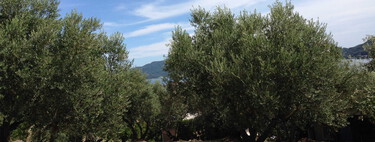
## The Olive Oil Crisis: Understanding the Current State of Spanish Olive Groves
### A Changed Landscape
Two years ago, the olive oil industry in Spain was marked by panic, with some producers even employing anti-theft alarms for their olive oil jugs. Prices for extra virgin olive oil (EVOO) soared close to ten euros per liter, prompting concerns about the sustainability of traditional olive farming. Fast forward to today, the situation has drastically reversed, with over 75% of Spain’s olive groves reportedly operating at a loss, as indicated by the Spanish Association of Municipalities of the Olivo (AEMO).
### The 75% Statistic: A Deeper Look
The recent findings from the AEMO shed light on this troubling trend. Their studies reveal that the average price for olive oil at origin has dropped to just 3.51 euros per liter. This figure signifies that a staggering portion of the olive-growing areas are no longer profitable or are barely surviving financially. The AEMO emphasizes that this broad-strokes statistic underscores a more complex landscape in which various cultivation systems contribute differently to profit margins.
For instance, the cost of harvesting from traditional mountain olive groves is approximately 5.31 euros per kilo, in stark contrast to the irrigated olive groves, where costs hover around 3.07 euros. This significant discrepancy illustrates why traditional growers struggle while their irrigated counterparts thrive.
### The “Hunger Games” of Olive Farming
It’s important to recognize that the AEMO is undoubtedly biased as it advocates for traditional olive farming methods. However, their data fits into a larger narrative: the irrigated olive grove consistently outperforms its traditional counterpart. This stark reality has sparked a frantic race among farmers to irrigate as much land as possible, often at high social, economic, and environmental costs.
### Current Market Dynamics
The oversupply of oil has exacerbated the problem. After experiencing low production seasons, the industry surged from around 666,000 tons in 2022/23 to an astonishing 1.4 million tons across the last two harvests. This rampant production, coupled with low prices, has pressured many producers to absorb losses just to remain solvent.
### Why Should We Care?
The plight of olive farmers is not simply an agricultural issue; it has significant implications for the economy, labor markets, and societal structures in what is often referred to as “Empty Spain.” The olive grove plays a pivotal role in these communities, serving as a linchpin for economic activity and social stability.
### A Shift in Agricultural Models
Despite the challenges, it is crucial to distinguish between surface area and actual productivity. Irrigated olive groves are significantly more productive than traditional ones and are increasingly taking precedence within the sector. Consequently, Spain is witnessing a transformational shift in its olive oil industry.
As this model evolves, we are beginning to see repercussions that will likely be detrimental to a large part of Spain’s agricultural heartland, with many traditional olive farmers at risk of fading into obscurity.