
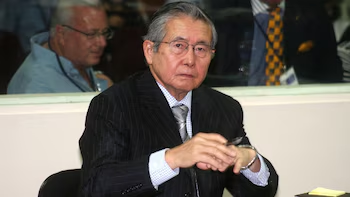
The Supreme Court of Chile has officially dismissed the extradition process concerning former Peruvian dictator Alberto Fujimori. This procedure was initiated as Peru sought to prosecute Fujimori for multiple crimes, including significant cases of corruption and human rights violations that occurred during his administration.
The Supreme Court’s Decision
In June 2024, Judge Andrea Muñoz Sánchez of the Supreme Court had initially consented to extend the extradition for five out of the eight requested cases. The cases included:
- Forced Sterilization Case: serious injuries leading to death amid severe human rights violations
- Massacre at the Castro Castro Prison: qualified homicide and serious injuries
- Extrajudicial executions during the Chavín de Huántar operation: qualified homicide
- Kidnapping of soldiers during the self-coup of April 5, 1992: aggravated kidnapping
- Massacre of the Ventocilla family: qualified homicide and aggravated kidnapping
Rejected Cases
However, three significant accusations were dismissed at first instance:
- Illegal arms supply to the Revolutionary Armed Forces of Colombia (FARC): illegal arms supply, illicit association, violation of foreign sovereignty, and conspiracy
- Manipulating the editorial line of Panamericana Televisión: illicit association and fraudulent embezzlement
- Unauthorized recordings during a National Defense Council session: revelation of national secrets
The Impact of Fujimori’s Death
Tragically, during the extradition proceedings, Alberto Fujimori passed away on September 11, 2024. His death rendered the ongoing process moot. Thus, the Second Chamber of the Supreme Court of Chile ruled that the extradition process was now ineffective. The final dismissal effectively concluded the legal pursuit following his demise.
The ruling noted, “with it (loss of effectiveness), the subsequent need to terminate it extraordinarily by declaring a definitive dismissal.” This conclusion highlights the primary legal ramifications of his death, marking a significant end to the extradition efforts.
Responsibility of the Judicial System
The Supreme Court emphasized that while the extradition process was dismissed, it does not absolve Fujimori from the accusations made against him. The Peruvian justice system retains responsibility for addressing his criminal liabilities, as stated in the ruling. “The only effect sought by the declaration of definitive dismissal is to transfer to Peru the power to declare the former’s criminal responsibility extinguished,” the court added.
Consequently, it will be up to the Judicial Branch of Peru to formally declare the extinction of criminal actions against Fujimori for the multitude of crimes attributed to him throughout his administration.