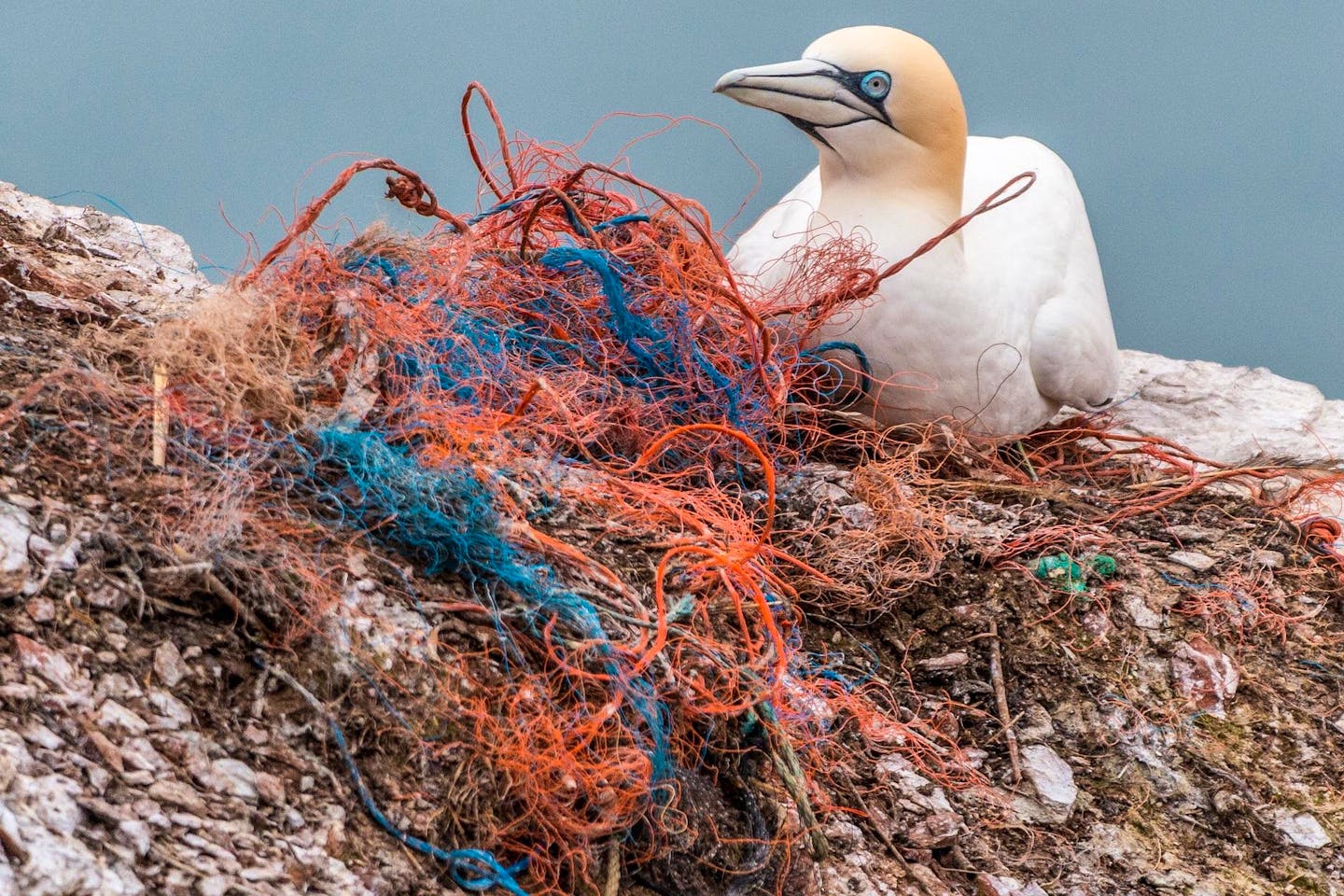
Microplastics, particles smaller than 5 millimeters, pose a severe environmental threat, entering ecosystems and the food chain, affecting wildlife and human health. In Norway, annual emissions reached 19,000 tonnes in 2020. They harm animals by causing false satiety and internal damage, while also carrying pollutants that compromise health. Research from Wuhan University presents a promising filtration method using biodegradable materials from squid and cotton, removing up to 99.9% of microplastics from water. Although results are encouraging, challenges remain in managing the waste filtration process and ensuring it doesn’t transfer pollutants between ecosystems. Addressing plastic pollution remains essential.
Microplastics as an overpower are used for pieces of plastic less than 5 millimeters. This is a very well -known environmental problem that can do great damage to different ecosystems. In 2020, the Environment Directorate found that annual microplastics emissions were 19,000 tonnes in Norway. One can now find such particles in all Arctic marine habitat, and it quickly enters the food chain by eating shells, fish and birds. Damage to humans, animals and the environment microplastics are now everywhere in nature, and it can be dangerous for our health. A prolonged and high degree of exposure can lead to lung disease, cancer and death. Microplastics are also very harmful to wildlife. Between others, it can get stuck in the digestive system for animals that cannot distinguish between food and plastic waste. The plastic can give a false saturation, and coastal birds and fish can die of hunger as a result of this. These plastic particles can also lead to internal damage and changes in growth and reproduction in animals that have had it. A total of 94 per cent of the plastic portar in the sea is lying on the seabed. Microplastics, according to the Environment Directorate, have been detected in organisms at all levels of the food chain – from the smallest plankton to the largest qualities. The small plastic particles can also spread environmental and health-damaging substances. Thus, the microplastics can help such pollutants be admitted to organisms. It is therefore important to find a solution to the problem. In addition to stopping microplastics emissions, it is also absolutely necessary to clean up and remove the microplastics many stages. This must be done so that wildlife and vulnerable nature are not damaged. Chinese researchers now claim to have come up with a very effective filtration method. Hope for the sea A study published in the peer -reviewed scientific magazine Science Advances in December 2024 shows a new breakthrough in the fight to remove microplastics in the sea. The researchers, from Wuhan University, the hiring research article by writing that removing microplastics from the lake is very important for the entire ecosystem, but that it is difficult to find a universal and effective strategy. The study shows that a binding of the inner bone of a tarda squid and cotton can absorb large parts of the microplastics. This is also absolutely degradable material, which is also easily accessible. Kitin from the bone to the tarda squid and cellulose from cotton can create a foam -like biomass filter; A kind of degradable “sponge”. These materials are already known for eliminating pollution from Waste. During testing, these biomass filter were tested in several different water samples – both irrigation water and water from the ponds, lakes and the sea. In the samples, these mushrooms removed up to 99.9 percent of all microplastics. The filter that the researchers made absorbed microplastics both by physically cutting it off, but also through electromagnetic attraction. Hopefully scalable both cotton and squid are cost -effective and easily accessible. The equipment for producing this filtration system is also widely available. The researchers believe that this method therefore has a good basis for being able to use on a larger scale. This is something that has been a constant problem with most earlier attempts to filter away microplastics. The absorbency was also not very affected by other pollutants, which has also been a problem with earlier methods. The tests showed that this was something that could work under different environmental conditions and for different types of microplastics. The method showed an efficiency of between 98 and 99.9 per cent in the tests. If further research can show that this can actually be scaled up, this can be an important way towards being able to find the solution to this major environmental problem. Even after using the material in five laps, according to the researchers, it was still effective, and they could still obtain 95-98 percent of all microplastics. This shows that the filter has great potential for being reusable. The authors of the study victory, according to The Guardian, that if more tests are successful then it can be developed on an industrial scale and can be used in the public filtration system. It can also be used for judging washing machines and dishwashers and other things that may be sources for microplastics pollution. New challenges Although research shows promising results, there are still some challenges. This is especially true that there is an uncertainty in research results if it can remove the plastic that already has socks down to the sediment. In an interview with CNN, microplastics researcher Shima Ziajahromi depicts Griffith University in Australia, also as the main part of the microplastics in the sea. In addition, there may be a problem associated with getting rid of the filter. The authors behind the study write that the natural degradation capacity of the biomass prevents the microplastics from returning to the environment, but it is a bit unclear what happens to the microplastics. – Although the material is degradable, the microplastics that are absorbed must be able to be thrown in a proper way. Without careful control, the process may risk transferring the microplastics from one ecosystem to another, Ziajahromi says. However, Ziajahromi confirms that this is a promising study that can pave the way for an effective way to clean the vulnerable marine ecosystem. Nevertheless, it should not be in the way of minimizing plastic pollution should be the main priority.
ttn-70