
Brihuega: The Lavender Capital Facing Tourist Influx Challenges
“The municipality collapsed, I had a bad time.” These words come from Luis Viejo, the mayor of Brihuega, a small town with a population of around 3,000 inhabitants. His statement speaks volumes about the overwhelming success of the town’s lavender fields, particularly during the summer when the flowering plants draw tens of thousands of tourists eager to capture the perfect selfie amid the vibrant violet petals.
This situation is a double-edged sword for the municipality. While the influx of visitors brings much-needed economic benefits, it also presents a management nightmare for local authorities. The mayor acknowledges that the tourist boom doesn’t come without its challenges, as it often results in overcrowding .
What’s the Problem? In a recent interview with the newspaper ABC, Viejo expressed his concerns about the situation. He invited tourists to explore Brihuega’s diverse tourist, cultural, and artistic offerings, especially during the weekdays. “I recommend visiting us from Monday to Friday. On weekends, it becomes complicated due to the sheer number of visitors,” he emphasized.
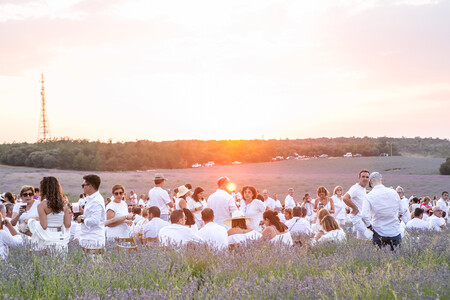
“I had a bad time.” Viejo’s experience from a particular Saturday stands as a testament to the overwhelming challenges faced. On that day, the municipality struggled to cope with the surge of tourists. To prevent similar occurrences in the future, he proposed plans to enhance local transport, including the establishment of deterrent parking outside the historic center, complemented by shuttle buses.
Statistics Speak: The tourist appeal of Brihuega is largely attributed to its lavender fields , which cover an impressive area of 1,000 hectares. The fields not only provide breathtaking views but also serve a commercial purpose as the flowers are distilled into essential oils used in perfumes. “Meticulously, we harvest millions of purple flowers that will subsequently be distilled,” the mayor explained. The striking spectacle of vast violet horizons is simply unparalleled.
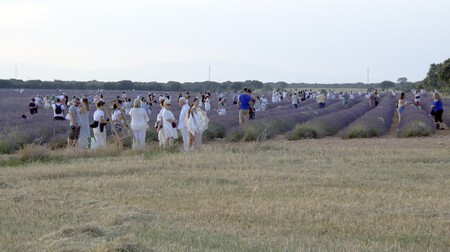
A Double-Edged Sword: Brihuega’s situation serves as a case study reflecting the “face A and face B” of tourist success. The positive side represents the economic influx, while the negative side reverts to the challenges of managing public spaces overwhelmed by tourists. Reports indicate that the lavender blooming season generates a whopping eight million euros within a few weeks.
Last year, Brihuega attracted approximately 140,000 visitors , and the mayor noted the difficulty in managing such high volumes in a short timeframe. Despite implementing a security commission, the influx creates significant strain on resources.
More than Flowers: The popularity of Brihuega’s lavender fields is not solely due to social media. The town has actively promoted its annual Lavender Festival , combining the stunning landscapes with performances from renowned Spanish artists. This year, concerts were held on July 11, 12, 18, and 19, featuring artists like Iván Ferreiro and El Arrebato, making the event a highlight on the cultural calendar.
Additionally, the festival includes lavender-based artisan workshops, further enriching the visitor experience. The Lavandula festival has already been running for several years, merging commerce with cultural enrichment.
A Broader Trend: Brihuega’s story also reflects a growing trend in flowering tourism , appealing to a demographic that seeks unique destinations far from conventional tourist traps. According to a recent report, flowering tourism has garnered 20% more travelers this year alone. In towns like Carmona, known for its sunflower fields, and Moratalla, recognized for its lavender, the influx of tourists continues to grow, signaling a broader interest in these seasonal spectacles.
Images | Lavender Festival, Emiliano García-Page Sánchez (Flickr), and MMV (Flickr)
The story of Brihuega—a town torn between the beauty of its lavender fields and the challenges of burgeoning tourism—paints a vivid picture of the complexities faced by small towns in navigating success. As these towns grapple with visitor management and local infrastructure demands, they must also recognize the importance of sustainable tourism practices to preserve their unique charm for generations to come.