
The Role of Specialized AI in Today’s Business Landscape
The initial wonder at ChatGPT stemmed not just from the magical experience of seeing responses generated character by character but also from its broad spectrum of knowledge. It seemed to know everything . From explaining quantum theory to crafting beautiful poetry, summarizing novels, and devising business plans in mere seconds, these models dazzled many.
They embodied the ideal student in the front row, captivating audiences with a perfect blend of literary analysis and advanced mathematics. However, as excitement faded, a critical question emerged: What is the actual utility of this technology?
According to a recent Deloitte technology trends report for 2025, many companies that initially invested in these generalist models—large, complex, and challenging to fine-tune—are now seeking smaller, more specialized alternatives. This shift reflects a growing realization that being a “jack-of-all-trades” isn’t always beneficial.
This philosophical transition mirrors an age-old debate in business: the contrast between specialist and generalist human roles. On one side lies the expert who has dedicated their life to mastering one field, while on the other stands the broad-minded individual with an adaptable, tangential knowledge base.
David Epstein explored this concept in his insightful book, ‘Range.’ His thesis challenges the traditional notion that specialization is inherently advantageous, suggesting that in our ever-changing world, it can become constricting. Interestingly, the rise of AI may be restoring value to specialized knowledge.
But why is this shift occurring? The crux of the matter lies in the performance of generalist models, which can often be perceived as lazy . While they attempt to cover various fields, they often lack depth and precision. For instance, an AI designed to assist medical professionals, lawyers, or engineers cannot afford to improvise; it requires rigorous context and an in-depth understanding of the subject matter, something provided not merely by the model’s size but by its focus.
Moreover, the movement toward specialized models enhances efficiency, providing more control over the output. Large models tend to be dominated by a few key players like OpenAI, Google, Anthropic, and Meta—they are often closed, opaque, and expensive. In contrast, smaller models can be open-source, trained locally, and tailored to specific niches, resembling tools rather than omniscient oracles.
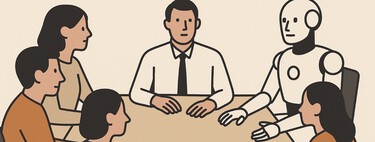
Additionally, this specialization brings about significant implications for employment. If a generalist AI can do “everything,” it presents a vague threat. On the other hand, a multitude of specialized AIs may not replace human roles but rather complement and enhance them. Picture a physician equipped with an AI tailored to their specialty, or an architect supported by an assistant proficient in blueprint reading. The dynamics shift when one considers collaborating with a finely-tuned tool rather than competing against a universal competitor.
This notion extends to an overarching theme: a new economy of knowledge . For years, the narrative emphasized the importance of being versatile and knowledgeable across multiple disciplines. Now, businesses are increasingly valuing specialized, technical, and profound knowledge that addresses specific needs. We recognize that AI transforms the way we work, but it may also reshape our understanding of what constitutes true knowledge—what is valuable and crucial in today’s landscape.
As we navigate this evolving landscape, a poignant question arises: What type of intelligence do we wish to nurture? Should we advocate for a model that knows a bit of everything, perhaps capturing attention at the cost of depth? Or shall we favor a myriad of humble, distributed intelligences, each focused on solving specific challenges?
The choice between generalists and specialists significantly impacts how we envision coexistence with AI and influences our future understanding of knowledge. It poses a fundamental query regarding the direction our technological advancements should take.