
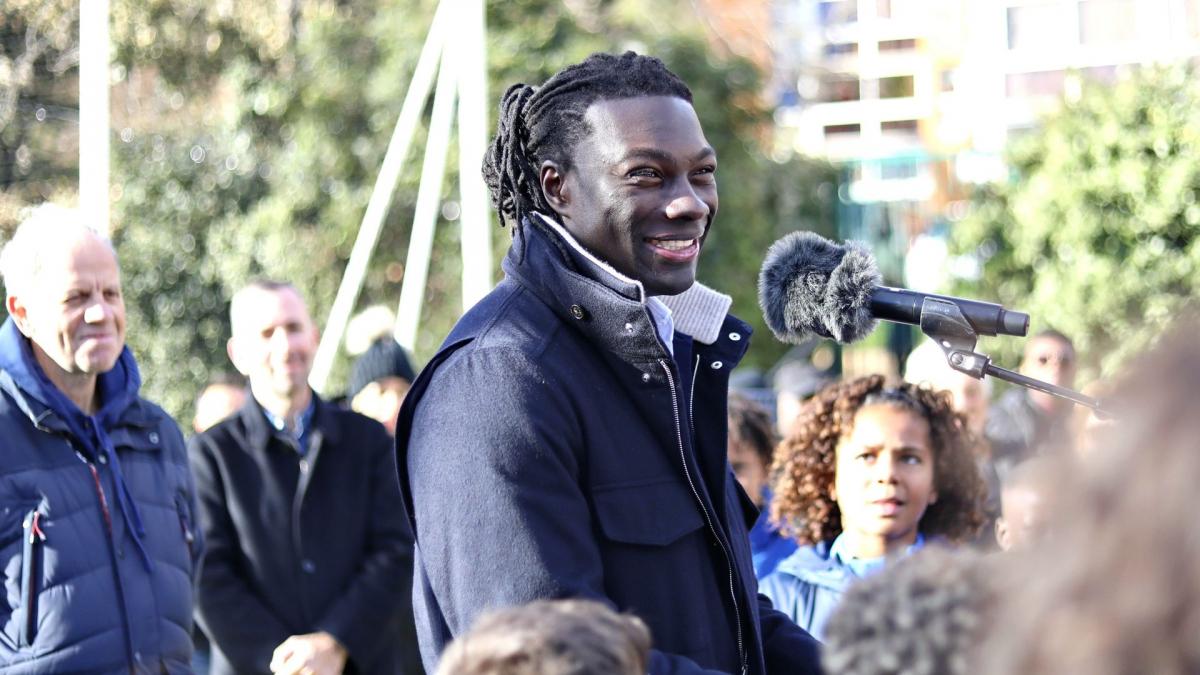
Bafétimbi Gomis and the Fight Against Racism in Football
Recently, Bafétimbi Gomis, the renowned French professional footballer, took to social media to address the controversial remarks made by former Canal+ columnist Pierre Ménès. Gomis expressed his profound disappointment and vehemently condemned Ménès’s comments during an interview with the far-right media outlet TVLibertés.
In his statement, Gomis emphasized the importance of unity within the French national team, declaring, “I am very disappointed with the words of Pierre Ménès and firmly condemn them. Calling hatred and division is unworthy. The strength of the French team, 2 times world champion, is its diversity. The choices of a coach are made on talent, not on skin color!!” Through this declaration, Gomis not only defended the integrity of his fellow players but also highlighted a fundamental principle: the importance of diversity in sports.
The Controversial Comments
During the interview, Pierre Ménès made several statements that have sparked outrage and discussions around race in football. One of his most incendiary remarks was, “If you will see a division of honor in the Paris region, you will generally see that there is a white on the field and he is the goalkeeper or rear right. Look at the French team. In the French team, today, there are eleven blacks.” Such statements have raised eyebrows and led many to question Ménès’s understanding of the values that sports represent.
Ménès attempted to defend himself by claiming that he is not racist because he has relationships with black individuals like Gomis, Thierry Henry, Nawell Madani, and Malik Bentalha. However, many feel that friendship does not excuse or negate the harmful rhetoric that can perpetuate division and hatred—issues that have been ever-present in both society and sports.
The Role of Diversity in Football
The French football team is a symbol of multiculturalism, thriving on talent from various backgrounds. Their success on the world stage, marked by two FIFA World Cup victories, showcases the strength that diversity brings to the team. Players from different racial and ethnic backgrounds have contributed significantly to this success, proving that talent knows no color.
In recent years, football has increasingly become a platform for social change. Players and clubs have taken significant steps to combat racism and promote inclusivity. Campaigns like “Kick It Out” and “Black Lives Matter” have gained traction, illustrating a collective commitment to eradicating racism in the sport. Gomis himself has been an outspoken advocate for racial equality, standing against discrimination and calling for systemic change within the football community.
The Backlash Against Ménès’s Remarks
The backlash against Ménès’s comments has been swift and intense. Fans, analysts, and fellow players have criticized his statements, emphasizing that such dialogue only serves to foster division within a sport that prides itself on unity. The football community has rallied around Gomis’s position, amplifying the call for respectful and thoughtful discourse around race in sports.
Many football enthusiasts and supporters feel that it is essential for prominent figures in the media, like Ménès, to exercise caution when discussing sensitive topics related to race. The implications of their words can have far-reaching effects and contribute to a culture that either combats or perpetuates discrimination.
Moving Forward: A Commitment to Equality
As discussions surrounding racial equality in football continue, it is crucial for all stakeholders—from players and clubs to fans and media personalities—to engage in constructive dialogue. The fight against racism is not solely the responsibility of a single player, team, or organization; rather, it requires a collective effort to create an atmosphere where diversity is celebrated rather than marginalized.
The incident involving Pierre Ménès serves as a reminder that while progress has been made, there is still a considerable distance to cover in the battle against racism. By standing together, speaking out against discrimination, and promoting inclusivity, the football community can continue to thrive as a space where talent and hard work are valued, regardless of race or background.
Gomis’s brave condemnation of Ménès’s remarks reflects a larger movement in football and society at large—a movement that seeks to make the game more inclusive and equitable for everyone. By fostering understanding and promoting unity among players, fans, and supporters, football can serve as a powerful tool for positive change, shaping a future where diversity is not just accepted but celebrated.