
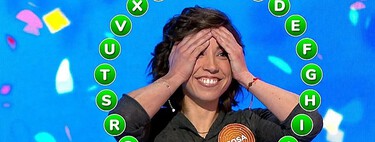
## The End of an Era: Antena 3 and ‘Pasapalabra’
It is the most-watched program on Spanish television, but Antena 3 is now grappling with significant changes. This challenges not just the show’s mechanics but the essence of what has become its iconic moment: the Rosco segment, where contestants race against the clock to complete the alphabet in puzzle form. A landmark ruling from Spain’s Supreme Court has confirmed that El Rosco, a beloved segment of “Pasapalabra”, was never owned by Antena 3. The rightful owners have been waiting for decades, and the time has come for the courts to agree with them.
### The Ruling
On April 30, 2026, the Civil Chamber of the Supreme Court issued a pivotal ruling, which was made public on May 21, 2026. This decision upheld the earlier judgment of the Provincial Court of Barcelona and rejected appeals from Atresmedia and ITV Studios. The court concluded that El Rosco is a protected work under intellectual property laws, owned instead by the Dutch company MC&F Broadcasting Production and Distribution CV. The ruling mandates the cessation of all Rosco broadcasts and requires compensation of €50,000 for moral damages.
### Implications for ‘Pasapalabra’ Viewers
A particularly striking detail from the ruling is the requirement that all recordings of programs featuring El Rosco be destroyed. While this “destruction” primarily targets versions intended for commercial exploitation, it also means that Antena 3 cannot license or distribute episodes of “Pasapalabra” that include El Rosco. Any episodes existing on platforms like Atresplayer would need to be removed.
### Atresmedia’s Defense
Atresmedia argues that El Rosco is a generic concept of arranging questions alphabetically, which, under the law, isn’t protectable. However, the Supreme Court emphasized that El Rosco possesses “sufficient originality” attributed to the creative decisions made by its authors. The ruling highlights its unique circular format and game dynamics, setting it apart from other alphabet-based games that have emerged.
### Historical Context of El Rosco’s Rights
To understand this ongoing legal battle, we must trace back to its origins. El Rosco was created by Italians Reto Luigi Pianta and René Mauricio Loeb, initially as part of the program “End Game 21×100” in the 1990s. Their rights were then assigned to the Dutch firm MC&F. Complications arose when ITV began licensing “Pasapalabra” to other European networks, including El Rosco as part of the deal, which MC&F contested for years.
### Previous Legal Battles
This isn’t the first time the Spanish television landscape has shifted due to ‘Pasapalabra’. In 2019, Telecinco was forced to stop airing the program after a lawsuit from ITV. Following this ruling, ITV granted the rights to Atresmedia, allowing Antena 3 to resume broadcasting in May 2020. The show has since continued to grow in popularity.
### Future of ‘Pasapalabra’
Despite these challenges, ‘Pasapalabra’ remains a core fixture of Antena 3’s programming. Although the ruling doesn’t eliminate the show entirely, it requires significant adjustments. Antena 3 must now consider alternatives: negotiating directly with MC&F for a usage license, creating a new final test to replace El Rosco, or waiting for ITV to secure an agreement with MC&F. Unfortunately, none of these options are quick fixes, and each presents a risk of altering a formula that currently delivers high ratings.
### The Mediaset Twist
Meanwhile, Mediaset, a competing network, has reportedly secured the rights to Rosco, conditional on the Supreme Court’s final decision. This sets the stage for a division where Antena 3 retains ‘Pasapalabra’ but cannot use El Rosco. Should Mediaset proceed, they can create their show around Rosco, adding another layer of complexity to an already intricate situation.
In summary, the decision marks a pivotal moment in Spanish television, altering power dynamics between networks and defining the future landscape of ‘Pasapalabra’. As we move forward, the key player will be whichever network can adapt to control access — and ultimately, the audience.