
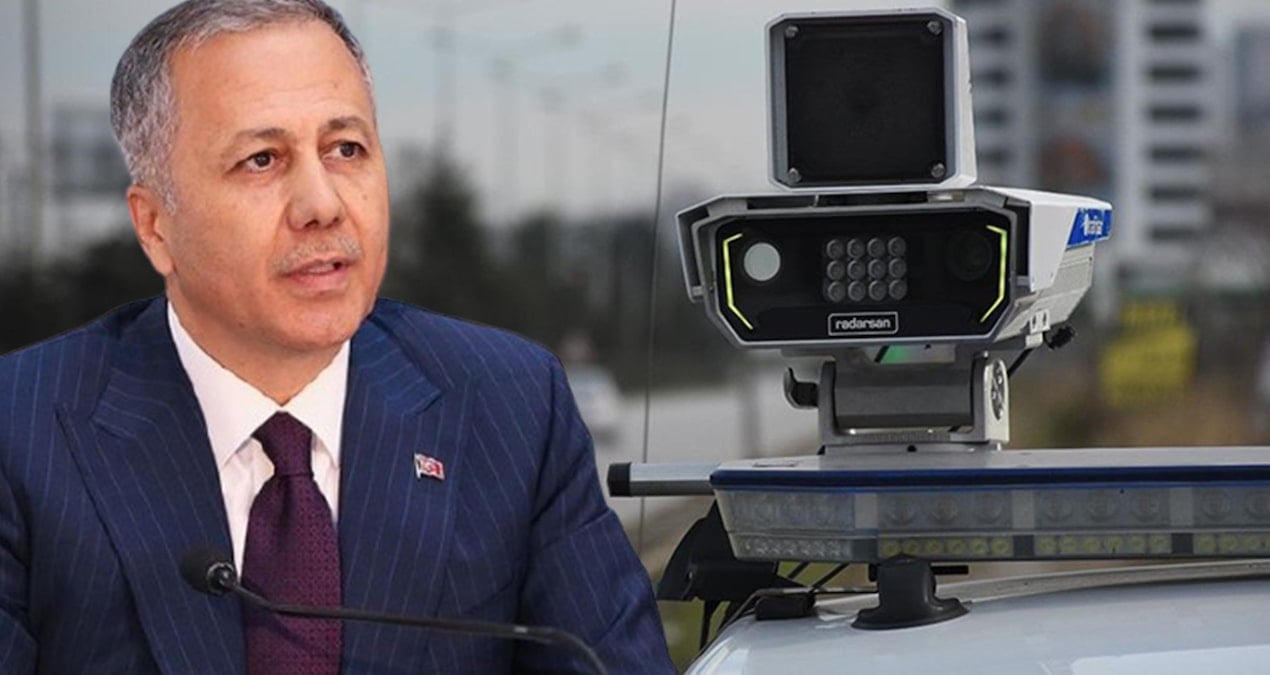
Interior Minister Ali Yerlikaya recently shared the government’s traffic safety measures for the upcoming Kurban Bayramı during a televised interview. He emphasized that the ministry has completed its preparations to ensure security and peace on the roads during the holiday, and that a circular regarding these measures was sent to all provincial governments on May 26.
Yerlikaya noted:
“WE HAVE TAKEN ALL OUR MEASURES”
As the holiday approaches, traffic reaches its peak during departure and return times. This is particularly true for intercity roads and urban centers within cities, where increased traffic is expected during holiday visits. “We have taken all necessary precautions based on past experiences of risks associated with previous holidays. Our goal is to reduce these risks to a minimum or eliminate them entirely,” said Yerlikaya.
“A RADAR EVERY 30 KILOMETERS”
Minister Yerlikaya stated that there will be 1,485 mobile radars monitoring speed both day and night. He specifically cautioned citizens planning to use the highways, saying, “There will be a radar every 30 kilometers, both during the day and at night. We will have 120 radars on motorways. We do not aim to penalize our citizens, but rather, our only objective is to prevent loss of life and injuries on the roads.”
“SOCIAL ANGER IS ESCALATING”
However, these statements were met with skepticism from former AKP MP Şamil Tayyar, who voiced his disagreement with the measures. In his social media post, he remarked, “A new social reaction is emerging that appears poised to shake up the priority issues on our agenda.”
“A CALL FOR A COLLECTION CAMPAIGN”
Tayyar criticized the AI-supported radars placed strategically along highways, and the excessive enforcement on rural roads, explaining that these measures resemble a collection campaign more than genuine traffic monitoring. He expressed concern that social anger is rising exponentially due to the heavy concentration of radars, especially when speed limits of 50 km/h are enforced on three-lane dual carriageways , which he believes cannot be justified under the pretext of preventing fatalities.
Tayyar’s critique pointed out that the radar density in areas where traffic is already at a standstill is also problematic. “Traffic monitoring is undoubtedly important, but the primary goal of penalties should be preventive, not punitive in spirit,” he asserted.
“THE STATE DOES NOT TRAP ITS CITIZENS”
Tayyar concluded by emphasizing that the primary purpose of fines should be to prevent accidents rather than using cunning tactics to issue them. “The state does not set traps for its citizens,” he declared.
The discourse around traffic safety measures during Kurban Bayramı reflects a broader societal concern around governmental strategies and their implications for citizen welfare. While officials are focused on reducing fatalities and injuries during the holiday, the measures taken have sparked a significant debate about fairness and the purpose behind traffic surveillance. The ongoing friction between government objectives and citizen reactions will likely shape public discourse leading up to the holiday and beyond.