
| IN BRIEF |
|
Recent advancements in the field of robotic prosthetics bring a renewed hope for amputees and researchers alike. An innovative device developed by scientists promises to transform the way amputees interact with their environment. Thanks to ingenious design and patented mechanisms, this system offers remarkable precision and user comfort. Let’s take a closer look at these innovations that could redefine the robotic prosthetics sector.
A Revolutionary Robotic Hand: Lightweight and Controllable
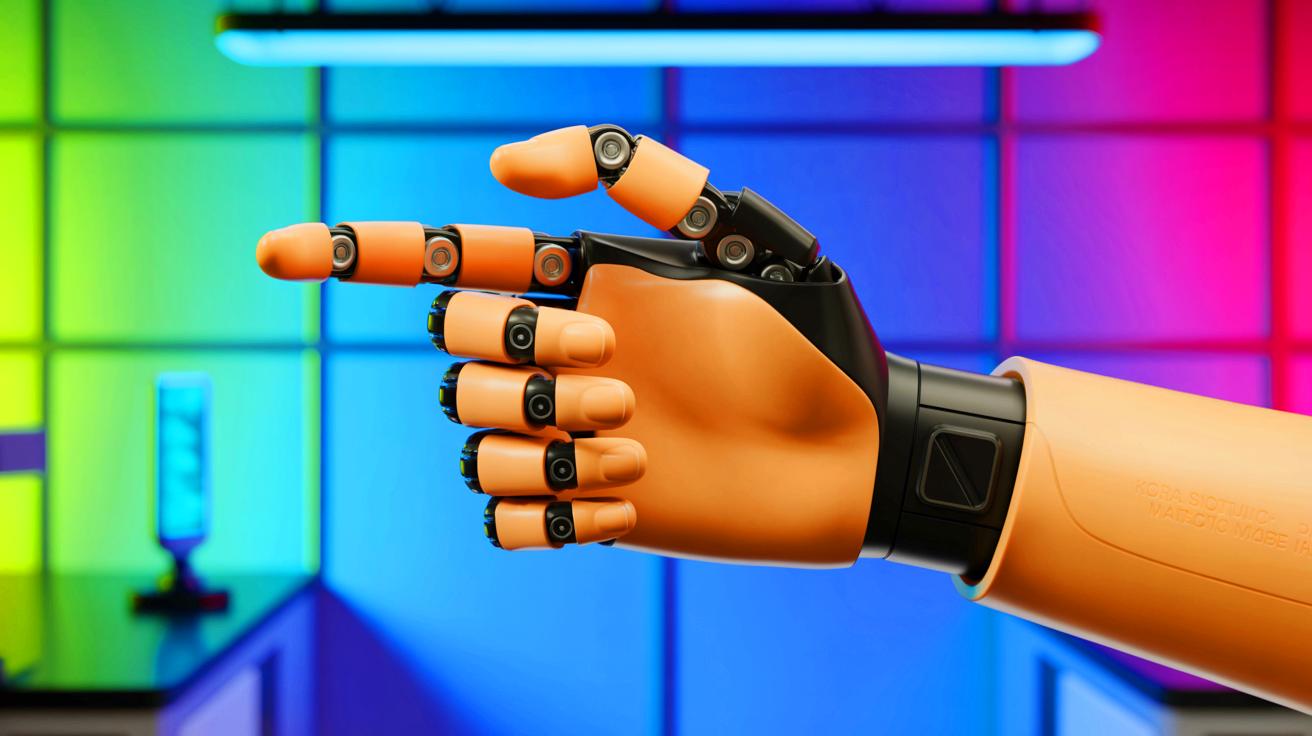
The new robotic hand developed by the Korea Institute of Machinery and Materials (KIMM) stands out for its lightweight design and precise controllability. Thanks to an innovative mechanism, the hand offers two degrees of freedom at the thumb , allowing independent control via a single actuator. This development not only reduces the weight of the device but also enhances its functionality. Users can now perform various grasping tasks with unprecedented ease and simplicity. The adaptive system shape enables more fluid interaction with objects, thereby reducing energy consumption and extending battery life.
Researchers have integrated a hybrid cable linkage system , combining the benefits of traditional four-bar systems and cable-driven mechanisms. This enables a more natural grasping trajectory while ensuring a strong and adaptable grip. This is a significant advancement that could enhance the global competitiveness of locally developed myoelectric prosthetics.
Towards Integration with Humanoid Robots
Beyond improving prosthetics for humans, KIMM researchers are keen to apply this innovative technology to humanoid robots. These robots, capable of generating various control commands easily, would greatly benefit from the mechanisms developed for the prosthetic hand, as these reduce computational load and improve responsiveness. In other words, this could lead to the creation of more practical and efficient robots.
The prosthetic hand uses an under-actuated thumb, cleverly employing the Geneva mechanism, which allows a single actuator to independently control adduction-abduction and flexion-extension movements. Unlike conventional products that require passive joints or additional actuators, this new approach offers a lightweight design with enhanced performance.
Implications for Users and the Market
This technological advancement extends beyond mechanical improvements. It could change the daily lives of users, allowing them to perform grasping tasks naturally and intuitively. Simple and efficient movement commands enable users to execute complex gestures without conscious effort, thereby replicating the spontaneity of movements seen in individuals without disabilities.
Additionally, the patent applications filed for foundational mechanisms signify an imminent commercialization. Researchers are actively pursuing technology transfer, which could open new opportunities in the prosthetics market, further strengthening the position of Korean innovations on an international scale.
A Promising Future for Robotic Prosthetics
The ongoing developments at KIMM signify a significant leap in the realm of robotic prosthetics. With a design that combines lightweight and efficiency, these new prosthetic hands offer practical and functional solutions for users. The combination of cable linkage technology and the Geneva mechanism creates synergy that enhances both grip and stability.
As researchers continue to explore new applications and refine their inventions, one question remains: how will these innovations transform the daily lives of robotic prosthetic users, and what will the next steps be in the evolution of these technologies?
The author leveraged artificial intelligence to enrich this article.
Did you like it? 4.5/5 (22)