
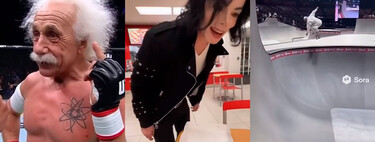
It hasn’t rained this much since that infamous video of Will Smith eating spaghetti went viral. However, in the span of just a few years, technology has evolved tremendously. We’re now able to take inspiration from existing content and create videos with unsettling fidelity . Ironically, when AI “steals,” there’s often an artist mimicking those very peculiarities, leading to creations that appear distinctly artificial . This blend of innovation and absurdity is both intriguing and unsettling.
Tianran Mu, a Chinese actor and content creator, recently explored how AI-inspired content can be transformed. At just 29 years old, Mu posed the question of how he could channel what AI does into his own creations. Check out this engaging video of Tianran Mu—the one with the noodles—[here](https://www.bilibili.com/video/BV1iE4m1R7tF/).
The video showcases some of the clumsiness and misplaced expressions we often associate with generative AI failures. Mu recognized these unique gaps in technology as an opportunity to craft a series of videos that embrace these peculiarities .
40 Years of Forgiveness
Recently, an insightful piece by Wired was released featuring an interview with Tianran Mu. In his early career, Mu sought work in the film industry , hoping to land a position at the illustrious Hengdian World Studios. Unfortunately, he found little success. Thus, in 2019, he began producing sketches across various Chinese social media platforms, where he slowly gained traction.
After experimenting with content creation through AI, Mu began to discern the peculiar patterns where technology stumbles. Examples include unnatural body movements , erratic glances, and overlapping plot lines. By 2024, he initiated a series of short videos that imitate these quirks, gifting viewers a way to differentiate between AI-generated footage and human performance.
What’s fascinating is that it’s genuinely humorous. In several of his videos, Mu employs different actors to portray the same role, effectively mimicking AI-generated continuity errors. The characters behave as if they are robotic, staring blankly and failing to interact authentically with their environments.
The impact of Mu’s work is palpable. His content has exploded across Chinese social networks and, only weeks ago, began garnering attention on Western platforms like X and Instagram. Many of his videos amassed over 10 million views , leading to thousands of reactions from audiences who had never encountered his work before.
This phenomenon has struck a chord amidst an ongoing debate about AI-generated content. The conversation intensified with the introduction of Sora 2 , the advanced OpenAI model that presents challenges in discerning whether a video is genuine or artificially produced. Speculations about content theft for AI training have sparked further controversy, yet Mu saw a unique opportunity in Sora 2.
He noticed that the human characters generated by Sora often laugh in almost uncomfortable ways and have hair with strange physics. In light of this, he recently released a video that effectively parodies these quirks:
Interestingly, despite being entirely handcrafted , Mu’s video may appear to evoke the uncanny valley more strikingly than some AI productions. This raises questions not just about Mu’s skill but about the darker implications of Sora 2’s advancements. During his interview with Wired, Mu disclosed that parodying Sora 2 has become increasingly challenging due to its enhanced quality.
He further expressed his concern regarding the future, stating that if the current trajectory continues, soon there may be nothing left to imitate. Mu noted, “If I attempt to act as AI would, I would just be acting like a human,” a statement that resonates deeply with many creators. While his work is gaining viral fame , he acknowledges that such recognition does not directly pay the bills, and he worries that in two years, AI could potentially replace not only special effects teams but actors themselves.

Mu lamented the increasingly competitive landscape for actors, noting that it is already challenging to compete with contemporaries, let alone non-existent entities that can emulate human behavior subtly. Despite enjoying newfound contracts from companies seeking to harness AI technology for campaigns in China, he insists that all his content remains distinctly human-driven , as his ultimate goal is to showcase his unique acting capabilities.
As we traverse an era dominated by AI, the implications for content creators and traditional actors remain uncertain . The boundaries between genuine artistry and AI-generated creation are blurring, raising essential questions about the future of creativity and the role of human talent in an ever-evolving technological landscape.
Images | Tianran Mu
In Xataka | YouTube is becoming much more important to Google than its video platform: in its search engine