
Rediscovering Luis Rosales: A Treasure Chest of Poetry
A Surprising Discovery
Recently, Luis Rosales Fouz received an unexpected call that changed his understanding of his late father, the esteemed poet Luis Rosales. The president of the community at Vallehermoso 26, where Luis Rosales lived for several years, contacted him. During a cleaning of a storage area, the president discovered a large trunk that belonged to the poet. This discovery revealed a treasure trove of writings, letters, and documents that had been hidden away for almost 30 years.
The Treasure Within
Upon opening the trunk, the president was mesmerized by the contents. She spent four hours reading through the writings, ultimately recognizing the historical significance associated with the location of these items. Luis Rosales Fouz, the only son of the poet, acknowledged that he never knew of this trunk’s existence. He described it as a “green, somewhat dilapidated treasure.” Following the call, he arranged for a moving company to take the trunk to his apartment in Madrid.
A Glimpse into the Poet’s Life
In his home, Luis Rosales Fouz is surrounded by reminders of his father, including books, framed poetry, photographs, and portraits. The trunk’s contents contain various writings from his father’s tenure at the Instituto de Cultura Hispánica, where he began working in the early 1950s. Luis Rosales Fouz explained that he has only read about 10% of what the trunk contains, including many important documents from different stages of his father’s career.
Historical Context and Significance
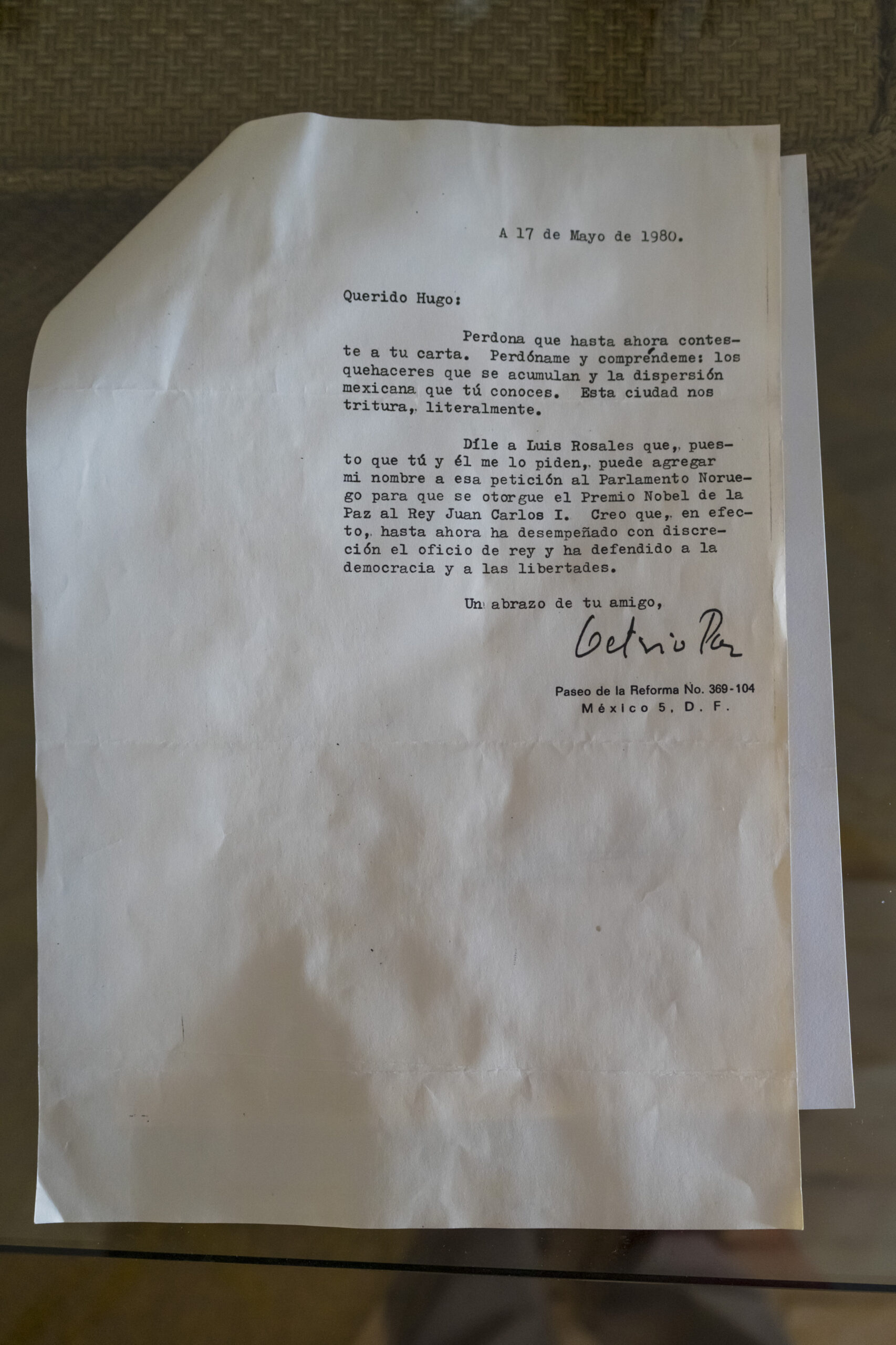
Luis Rosales was a prominent figure in 20th-century Spanish literature and played a vital role in bridging cultural ties between Spain and Latin America. In 1949, he undertook a poetic mission across South America and the United States, which remains a significant moment in his biography. The trunk also contains a letter from Octavio Paz, the Mexican Nobel laureate, in which he supports a petition for Juan Carlos I to be nominated for the Nobel Peace Prize, highlighting the political climate of the time.
Incriminating Accusations and Friendship
The trunk serves not just as a collection of papers but also as a defense against long-standing rumors surrounding Luis Rosales, particularly accusations of having betrayed his friend Federico García Lorca. The Rosales family attempted to hide García Lorca during a perilous period, and although their efforts were noble, they ultimately failed to protect him.
Luis Rosales Fouz reflects that his father narrowly escaped execution following the Civil War. Even after Lorca’s death, he continued to honor his friend through poetry, illustrating a deep commitment to preserving their bond.
The Ongoing Quest for Understanding
As Luis Rosales Fouz delves deeper into the trunk’s contents, he hopes to uncover not only unpublished poems but also to clarify his father’s legacy. For him, the exploration of the trunk is more than a mere historical endeavor; it is a way to confront and dispel the legends that have clouded his father’s memory.
Conclusion: A Legacy Preserved
Luis Rosales Fouz recognizes that he has much work ahead. Going through the forgotten trunk, filled with decades of history, will take months and, possibly, years. Each piece he uncovers brings him closer to understanding his father’s life and the tumultuous times he lived through. As he reflects on the late poet’s famous lines from Autobiografía, he is reminded that he is not only counting the pages left to read but also reshaping a legacy that deserves to be celebrated and clarified.