
Spain’s New Anti-Smoking Legislation: A Cultural Shift
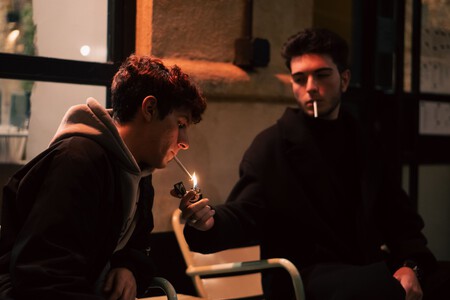
Some customs survive by pure inertia. In Spain, one of them consists of going out to a terrace, ordering a beer, and assuming that someone, sooner or later, will light a cigarette half a meter from your table. It doesn’t matter that you are eating, that there is a baby carriage, or a mother breastfeeding. It doesn’t matter if the smoke reaches you before the waiter does.
Historic Anti-Smoking Reform
So far: the Council of Ministers has given the green light to the project of the largest anti-smoking reform since the ban on smoking in bars and restaurants in 2011. To exemplify the power of this measure: in Madrid alone, there are more than 6,300 bars, almost 64,000 tables, and more than 200,000 chairs on terraces. That’s a significant impact on public spaces.
The Terrace: A Smoke-Free Zone
The terrace will no longer be a shared ashtray. The most visible measure affects one of the great symbols of Spanish hospitality: the terraces. Upon the law’s implementation, smoking will no longer be permitted on the terraces of bars and restaurants. Vaping is included in this ban, as the Government equates e-cigarettes, heated tobacco, and nicotine pouches with conventional tobacco in most restrictions.
The Youth Smoking Crisis
The Ministry of Health’s survey indicated that the prevalence of daily smokers among adolescents has reached all-time lows since recording began in 1994. However, concerns have emerged regarding sample distortions in these findings.
The danger of vaping. The Spanish Society of Family and Community Medicine (semFyc) warned that the issue has merely shifted rather than disappeared: a staggering 90.5% of underage smokers use both vapers and conventional cigarettes. Many youth now prefer electronic cigarettes, which they perceive as cleaner and more modern alternatives.
A New Reality for Smokers
Although prior legislation protected the interiors of premises, it left a considerable legal vacuum in outdoor spaces. With this reform, the risks associated with smoking in terraces will finally be addressed, especially for children, pregnant women, and hospitality workers who are exposed to it daily. This regulation aligns Spain with Sweden, the only EU country where smoking is prohibited in public spaces.
Expanding No-Smoking Zones
Tobacco also disappears from campus. The reform, promoted by Minister Mónica García, aims to expand smoke-free areas, including marquees, music festivals, and other outdoor non-open-air events, alongside theaters and cinemas. Notably, for the first time, it explicitly prohibits smoking by minors.
Additionally, the modified Law 28/2005 introduces new smoke-free zones, including beaches, sports centers, public swimming pools, National Parks, and vehicles used for professional purposes.
Denormalizing Tobacco Consumption
According to the new norm, smoking will stop being part of everyday life. The Ministry supported evidence indicating that seeing people smoke increases the likelihood that teenagers will smoke themselves. Thus, limiting visibility reduces the social allure of smoking.
“The reality of smoking has changed, and this reform pursues a very clear objective: moving towards a tobacco-free generation,” stated Minister Mónica García, with data seemingly supporting this ambition.
Stricter Measures for Minors
The big news: the minors. Previously, the law only prohibited the sale of tobacco to minors, but it will now also prohibit their consumption of it. This change carries significant legal implications, establishing outright bans on smoking, vaping, or using nicotine pouches by minors. Sanctions will target responsible adults and aim to reinforce preventive messaging rather than merely imposing fines.
The reform modifies the sanctioning regime, introducing fines starting at 200 euros for infractions. For minor offenders, financial responsibility falls on parents or legal guardians. Notably, economic penalties can be substituted with community service, reinforcing an educational focus for younger offenders.
Images | Pexels (Eyüpcan Timur, Helena Lopes)