
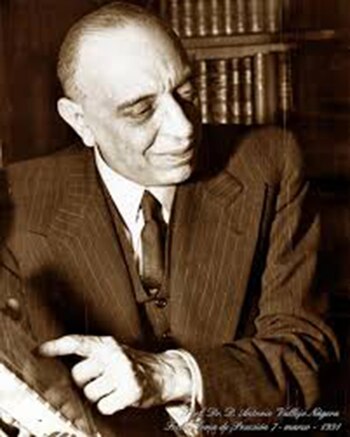
Withdrawal of the Grand Cross of the Civil Health Order from Antonio Vallejo-Nájera
The withdrawal of the Grand Cross of the Civil Health Order from Antonio Vallejo-Nájera has been announced by Spanish Prime Minister Pedro Sánchez. This move is set to take place during the next Council of Ministers meeting, marking a significant moment in Spain’s acknowledgment of its controversial past.
Background on Antonio Vallejo-Nájera
Antonio Vallejo-Nájera (1889-1960) was a military psychiatrist notorious for his role in the Franco dictatorship. His pseudoscientific theories aimed to eliminate what he termed the “red gene” from the Spanish populace. This concept, rooted in deeply flawed ideologies, deemed certain individuals as inferior for their political beliefs. Vallejo-Nájera’s methods contributed to severe human rights violations, torture, and the targeting of political dissidents.
Policies of Hate and Repression
Sánchez emphasized that no democratic society should honor individuals who masked their ideologies as legitimate science to justify acts of hate and repression. Vallejo-Nájera was implicated in some of the most egregious crimes during Franco’s rule, such as the forced removal of children from Republican families for “re-education” purposes. He also held misogynistic views, claiming that women possessed “atrophied intelligence” and suggesting their primary role was procreation.
A Call for Justice and Reparation
The Minister of Health, Mónica García, supported the decision, stating that maintaining Vallejo-Nájera’s name among awardees is incompatible with modern democratic values. She reiterated the fundamental medical principle, “primum non nocere” (first, do no harm), to contrast his harmful practices with contemporary mental health standards centered around human rights and dignity.
The Significance of the Grand Cross of the Civil Health Order
The Grand Cross of the Civil Health Order is Spain’s highest civil decoration in health care, awarded for exceptional contributions to public health. Its withdrawal from Vallejo-Nájera serves not only as an act of memory but also as a means to reaffirm contemporary democratic values. García characterized this action as an act of justice and reparation, aligning Spain’s health policies with principles that respect individual dignity and human rights.
Echoes of History: Vallejo-Nájera’s Infamy
Known as the “Spanish Mengele,” Vallejo-Nájera drew comparisons to the notorious Nazi physician Josef Mengele, who conducted horrific experiments during the Holocaust. His unethical practices and promotion of eugenics added a dark chapter to Spain’s medical history, illustrating the dangers of intertwining science with ideological extremism.
Vallejo-Nájera’s eugenic theories, part of the pseudoscientific movement of the late 19th and early 20th centuries, supported racial hygiene policies that laid the groundwork for Nazi atrocities. These historical echoes serve as a reminder of the importance of maintaining ethical standards in medicine and the dangers of topics misrepresented as science.
Conclusion
The impending withdrawal of the Grand Cross of the Civil Health Order from Antonio Vallejo-Nájera is a crucial step toward reckoning with Spain’s past. By confronting the legacy of individuals who promoted hate under the guise of science, Spain seeks to honor the principles of democracy and human rights that define its contemporary society. Through this act, the nation reinforces its commitment to dignity, care, and justice for all its citizens.