
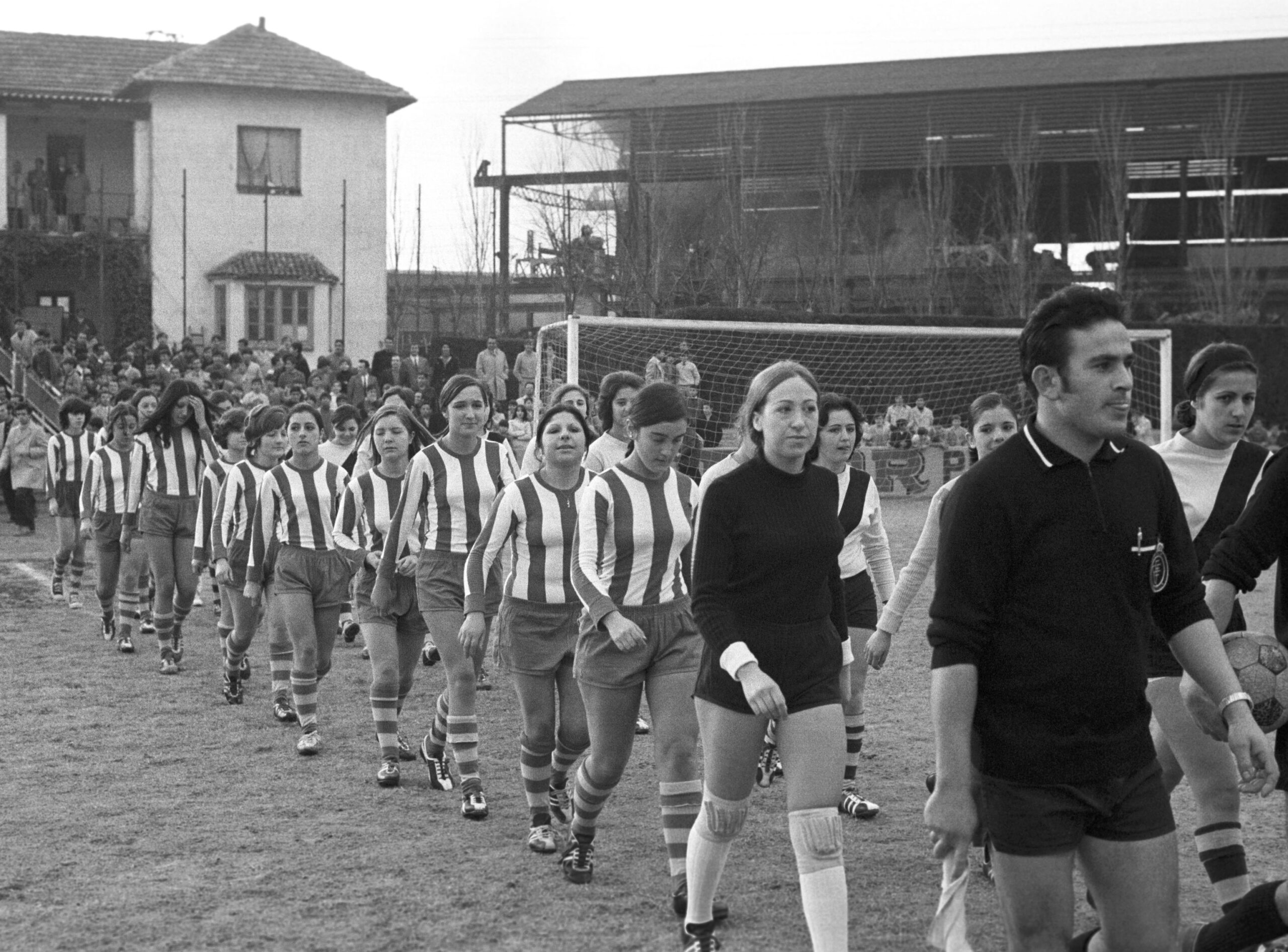
The Pioneers of Women’s Football Against Francoism
In 1970, the oppressive regime of Francisco Franco in Spain began to show signs of weakness. This year was marked by significant protests, such as the Burgos trials against ETA militants and a notable construction strike in Madrid. However, amidst this political turmoil, a groundbreaking moment emerged in women’s sports that changed the landscape of football in Spain forever.
A Historic Match
On December 8, 1970, two all-female football teams, Sizam (later Madrid Cultural) and Mercacredit, faced off on the muddy field of Boetticher in Madrid. This match, although unofficial and lacking federation recognition, attracted nearly 8,000 spectators who paid 25 pesetas each to witness history being made. As director Marta Díaz reflects, the images captured during that day showcased women competing fiercely against all odds.
The Legacy of Quilla
Among the eager crowd was a 15-year-old named María Ángeles Pérez, known as Quilla. After witnessing the match, she dashed to the sidelines, expressing her desire to play football. This incident marked the beginning of Quilla’s journey to becoming one of the pioneers of women’s football in Spain. Shortly after, she became a foundational player for the national team, blooming from a mere spectator to a midfield star.
The Cultural Impact
The film Pioneras: Solo querían jugar chronicles this historic match and highlights the pervasive restrictions on women during Franco’s regime. The regime promoted a restrictive view of femininity, prioritizing domestic roles as wives and mothers while sidelining any athletic pursuits. Through the lens of Quilla and others, the film reveals the struggles against these societal norms.
Director Marta Díaz emphasizes the importance of this era, noting how the residue of those oppressive attitudes still lingers today. The film illustrates that these women were not aiming to be heroes; rather, they aspired to be authentic versions of themselves, challenging the expectations set upon them.
Reflections on Past and Present
Marta Díaz expresses discomfort at the notion of nostalgia for a bygone era that was marked by suffering and oppression. Quilla supports this sentiment, recalling the subtle and overt challenges faced by women in football. Despite the insults and misogyny, their passion for the sport drove them forward.
“Today, women in football are recognized, especially when they win, but the condescension remains, and racism is still prevalent,” Díaz notes. The film seeks to bridge the gap between past and present, transforming a simple football match into a powerful narrative of resistance against societal constraints.
Conclusion
Pioneras serves as a reminder that these women’s actions were revolutionary in their own right. They faced the dual burden of societal expectations and institutional neglect to carve out a space for themselves in the world of football. “The dictatorship wanted submissive women, but they became authentic gladiators,” concludes Marta, echoing the sentiments of resilience and courage that resonate throughout the film.