
Civil Guard Director Denies Allegations of Conspiracy
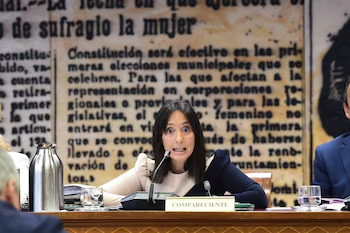
The general director of the Civil Guard, Mercedes González, firmly denied any involvement in alleged conspiracies against the Central Operational Unit (UCO) during her recent testimony before the Senate. She emphasized that she has “never, ever” interfered with ongoing investigations or acted against any agents within the Civil Guard due to external pressures.
Context of the Testimony
González’s appearance comes on the heels of a report submitted by the UCO to Santiago Pedraz, a judge at the National Court. The report suggested the existence of an organization aiming to undermine the credibility of UCO officials, thereby facilitating internal investigations against them. While González is not currently under investigation, her prior contacts with Leire Díez, a former socialist militant under suspicion, have drawn significant media scrutiny.
Dismissing Allegations
To clarify her position, González stated unequivocally, “I have never participated in any plot or conspiracy” against the UCO or its officers. She categorically rejected any claims that she has taken part in campaigns aimed at discrediting the UCO. Her assurance was straightforward: she has consistently upheld the integrity of judicial processes and has “never interfered” with any investigation involving the Civil Guard.
Relationship with Leire Díez
González attempted to clear up misunderstandings about her relationship with Leire Díez. She revealed that she became aware of Díez during her tenure as the Government delegate in Madrid, when Díez held a professional role at Correos. Their communication was strictly professional, mostly revolving around labor disputes relevant to the postal service.
In her narrative, González recounted that her first personal interaction with Díez took place in a café following a professional update from Díez. Crucially, she stated that they did not discuss any investigations or matters relating to the UCO during that meeting.
Subsequent Meetings and Concerns
González also acknowledged a second meeting with Díez, which occurred in 2025. During that meeting, Díez proposed reinstating Commander Rubén Villalba to his former position within the Civil Guard. González rejected this request, citing Villalba’s involvement in ongoing legal matters. Following this exchange, González confirmed that she “never saw her again.”
After learning about Díez’s participation in a video conference criticizing the UCO, González expressed her concerns directly to the leadership of the UCO, offering her “absolute human and personal support.” This action was prompted by her worry regarding the unwarranted scrutiny facing UCO officials.
Conclusion
Mercedes González’s testimony before the Senate serves as an attempt to quash circulating rumors of alleged conspiracies within the Civil Guard. As the agency navigates these turbulent waters, González’s assurance of integrity and respect for the rule of law remains crucial for maintaining public trust in the institution. The unfolding events reflect broader concerns about the relationship between political figures and law enforcement agencies, highlighting the need for transparency and accountability.