
Humanitarian Caravan Aids Stranded Drivers Amid Blockades in Bolivia
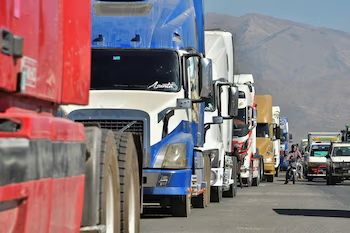
A humanitarian caravan embarked from La Paz, Bolivia, on Monday, aimed at delivering essential supplies to hundreds of transporters who have been trapped at blockade points for over a month. This initiative is spearheaded by the Ombudsman’s Office, in collaboration with the Red Cross and Cáritas Bolivia.
Appeal for Humanitarian Passage
Pedro Callisaya, the Ombudsman, addressed those involved in the blockades, urging them to permit the humanitarian convoy passage. He emphasized, “We ask those mobilized to be respectful of the entry and transit of this caravan that is only seeking to alleviate the most basic needs of the transporters who are currently stranded on the road,” as reported by local media.
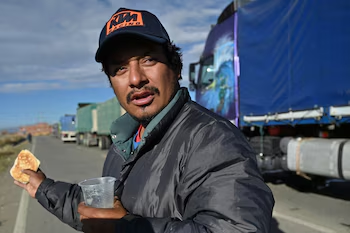
Callisaya expressed hope that “necessary contacts” had been facilitated to ensure the smooth passage of the caravan. There are reports from the Departmental Chamber of Transportation of La Paz estimating that between 800 and 1,000 truck drivers remain affected by the road closures along the route to Curahuara de Carangas, a town 268 kilometers from La Paz.
Resources in Critical Need
The caravan is expected to carry vital food, medicine, and other supplies, initially aimed at aiding around 600 truckers. Elizabeth Zabala, a representative from Cáritas Bolivia, highlighted the dire conditions, stating that many of the drivers are “hungry, cold, and have health needs,” with several requiring medical attention.
Devastating Impact of Blockades
Recent reports indicate that at least one truck driver has tragically lost his life due to the prolonged blockades, with additional cases also reported among those stranded. For nearly six weeks, Bolivia has been experiencing crippling road blockages primarily driven by peasants from the highlands, coca growers linked to Evo Morales, and various unionized workers. Their main demand is the resignation of President Rodrigo Paz, who has faced criticism for allegedly betraying campaign promises.
The majority of the blockades are concentrated in the highland region and in Cochabamba’s central valley, leading to significant shortages of food, fuel, medication, and other essential supplies, especially in La Paz, where access roads are blocked.
Government’s Response and Potential Solutions
As pressure grows for government intervention to restore order and free movement, the Paz administration has recommended a dialogue with protesters, acknowledging that their demands are “legitimate.” Despite over 40 days of protests, no significant negotiations have resulted.
Recently, leaders of the Túpac Katari Peasant Federation, one of the groups behind the blockades, have indicated fatigue with the ongoing situation, suggesting they may reconsider their demand for the president’s resignation. There are pleas for a set agenda to facilitate negotiations with the government, reflecting a potential shift towards dialogue.
On a similar note, the Central Obrera Boliviana has postponed a national meeting to discuss the status of the protests, signifying a possible reduction in the intensity of the blockades. Reports show a decrease in the number of active blockades, from over 80 to around 50; however, significant disruption persists along key transportation routes, leading to substantial economic losses and an exacerbation of shortages across the region.