
## The Mystery of the Hessdalen Lights
The Hessdalen lights are a captivating phenomenon reported in Hessdalen Valley, Norway, since 1811. However, it wasn’t until the 1980s that interest in these lights surged, particularly with the establishment of the Hessdalen Project in 1984. This initiative aimed to monitor and understand the lights, but despite extensive research, their exact cause remains elusive. Let’s explore this intriguing spectacle.
### A Disparate Phenomenon
Witnesses and scientists alike describe the Hessdalen lights as a highly varied phenomenon. Observations indicate that they can manifest at various heights, from ground level to mountaintops. Their movements also differ significantly; sometimes they glide smoothly, while other times they dart erratically in unpredictable directions. The lights generally appear white or yellow but can take on other colors, and their shapes can vary dramatically—from resembling an American football to an upside-down Christmas tree. Most eyewitnesses agree on one thing: the lights are generally about the size of a car.
### Monitoring the Hessdalen Lights
To understand these phenomena better, a multidisciplinary team of scientists from various Norwegian institutions launched the Hessdalen Project. This ongoing study employs advanced technology, including radioelectric spectrum analyzers, magnetometers, seismographs, photo cameras, Geiger counters, and infrared cameras. The aim is to analyze various factors such as earth tremors, magnetism, and radioactivity. Notably, this rigorous monitoring effort began in 1984 and continues today, contributing valuable data on this extraordinary phenomenon.
### Unique Hypotheses Surrounding the Lights
Perhaps one of the most eccentric hypotheses regarding the Hessdalen lights suggests they are the visible manifestation of micro wormholes bridging two points in space-time. However, this theory lacks scientific credibility and is primarily associated with fringe science.
#### Grounded Theories
More grounded hypotheses do exist, thanks to the data collected over the years. One credible theory posits that the lights could result from the decay of radon, a common gas in the region. This decay may produce alpha particles that ionize surrounding air and dust, leading to the formation of light-emitting structures known as Coulomb crystals.
Geological factors also play a role. Another theory suggests that combustion in the presence of air from dust clouds rich in scandium—a mineral abundant in the valley—might contribute to the lights’ phenomena. Furthermore, the piezoelectric effect, where certain materials emit electricity when subjected to pressure or deformation, is significant in this context. Quartz, found in abundance beneath the valley, is known for its piezoelectric properties.
### The Battery Effect
Remarkably, there may even be a “battery effect” occurring in the valley. The geological setup features rocks rich in zinc and iron on one riverbank, while the opposite side has copper-rich rocks. The zinc and iron could act as an anode while the copper serves as a cathode, creating a chemical battery. Local sulfur-rich mines may also release sulfur into the river, functioning as a bridge and enabling electricity to flow.
### The Emergence of Light
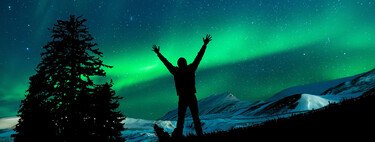
All these electrical emissions could lead to the ionization of air molecules, producing light—a process similar to that of the northern lights but with different sources of ionizing particles. The colors emitted depend on the specific molecules present in the air, which is why they are not always uniform; however, white and yellow shades are commonly observed.
In summary, while the origin of the Hessdalen lights remains a mystery, the various theories and ongoing research make this phenomenon all the more fascinating. Whether viewed at night or during the day, these lights continue to intrigue scientists and explorers alike.
Image | Bjørn Gitle Hauge, Østfold University College, Fredrikstad, Norway