
Ukrainian Drones: A New Kind of Rescue Mission
Lifesaving Robots in Conflict
The war in Ukraine is witnessing a radical shift in the use of unmanned vehicles. Traditionally associated with military operations—transporting weapons, ammunition, or explosive devices—these ground drones are now playing an unconventional role. They are being deployed to evacuate elderly civilians stranded in war-torn areas fraught with danger from bombings, mines, and artillery fire. In this context, the humanitarian needs are redefining their purpose, making their cargo not just military supplies but vulnerable lives seeking safety.
Rescue Through No Man’s Land
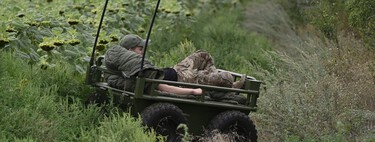
A recent operation in the Donetsk region highlights this new mission. A drone unit from the Kraken group was approached by a woman requesting help to evacuate alongside three others, one of whom was injured. After extensive coordination, operators dispatched a Zmiy Logistic vehicle—designed to carry substantial weight—and traveled about 16 kilometers to rescue the group. This drone’s journey facilitated an escape route through perilous territory, allowing the elderly evacuees to reach safety, highlighting the innovative spirit within a dire situation.
The Gray Zone: A Hidden Reality
These rescue missions shine a light on the often-overlooked “gray zone” of conflict—areas hotly contested by both sides where essential services have largely vanished. Civilians, particularly the elderly, continue to inhabit these zones, often hesitating to leave their lifelong homes for fear of instability. Many hold out hope for an end to the conflict, while others are tied to caretaking responsibilities. As power outages and bombings become part of daily life, the necessity for humane interventions becomes ever clearer.
Iron Soldiers on a New Mission
The use of drones for civilian evacuation is not isolated. A poignant scene unfolded when a 77-year-old woman was saved using a drone operated by the 60th Mechanized Brigade. The soldiers brought her a blanket with a heartfelt message: “Grandma, get on.” Such moments capture the evolution of military technology. Originally designed for destructive purposes, these “iron soldiers” are now responsible for saving lives—an ironic twist in their narrative.
The Rise of Total Automation
An overarching transformation is occurring in warfare, where both Russian and Ukrainian forces are accelerating the integration of unmanned vehicles into conflict. Currently, these drones not only transport supplies and munitions but also participate in rescue missions deemed too perilous for humans. Ukrainian Minister of Digital Transformation, Mykhailo Fedorov, has highlighted an ambitious goal of acquiring 25,000 ground drones by mid-2026, aiming for a future where frontline logistics are entirely drone-dependent. Notably, over 21,500 missions have already been executed in the first quarter of this year alone.
Unexpected Consequences of Military Innovation
While military advancements traditionally evoke images of destruction, Ukraine showcases an unexpected narrative—using advanced technology for humanitarian efforts. The same drones designed to minimize risk for soldiers are rescuing civilians trapped in perilous situations. This evolving function underscores the potential of military technology to serve humanitarian roles, raising questions about future warfare and civilian safeguarding.
In a world where conflict often leads to despair, the innovative use of drones in Ukraine illustrates that technology can transcend its intended purpose, providing hope and safety to those trapped in the crossfire of an ongoing war.