
Claude Opus 4.8: A Surprising Evolution
We didn’t expect it so soon, but Claude Opus 4.8, the new version of Anthropic’s frontier model, has arrived. Just 41 days after the launch of Opus 4.7, this rapid release suggests the company was not satisfied with the previous version, which received lukewarm reviews. However, the standout feature of Opus 4.8 isn’t just improved performance—it’s the model’s newfound honesty.
Performance Improvements
Better Yet Not The Main Focus
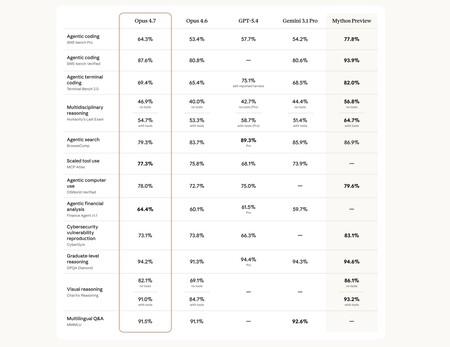
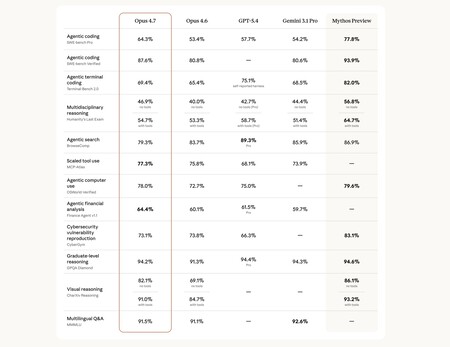
While Opus 4.8 outperforms Opus 4.7 and other notable models like GPT-5.5 and Gemini 3.1 Pro, what’s particularly intriguing is the model’s approach to its own capabilities. Although it excels in benchmark tests—except for TerminalBench 2.1, where GPT-5.5 does slightly better—the real surprise lies in how it addresses its own reliability and uncertainties.
Honesty Above All
A New Definition of Intelligence
Boris Cherny, head of Claude Code at Anthropic, highlighted that Opus 4.8 not only improves programming skills but also exhibits honesty. According to Cherny, “it is significantly more honest about its own work.” The new model is designed to acknowledge when it is unsure, rather than prematurely declaring success.
A More Humble Model
Embracing Uncertainty
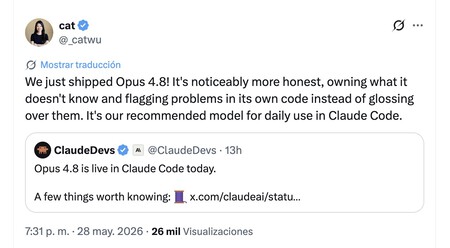
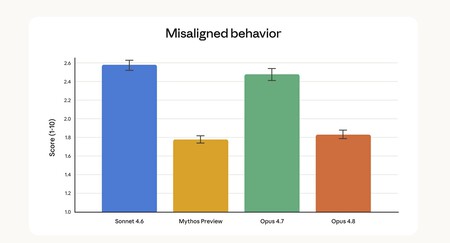
Catherine Wu, another engineer at Anthropic, emphasized the evolution of the model’s personality. Opus 4.8 can admit when it lacks information instead of blindly providing answers. This enhances what users describe as a more “aligned” model, one that better reflects human ethics and values.
Reducing Hallucinations
A Human Touch
Recent advancements in AI have focused on minimizing hallucinations, where models generate inaccurate information. Less prone to mistake-making, Opus 4.8 sets a notable precedent by recognizing its limitations. This human-like trait brings it closer to what users expect in terms of reliability. The System Card released with Opus 4.8 confirms these developments with various performance metrics.
Dynamic Workflows and Future Trends
Introducing Dynamic Workflows
The new model also features dynamic workflows, allowing users to engage in more complex tasks. This capability is a significant upgrade, enabling the deployment of numerous agents simultaneously—ideal for tasks like code analysis and migration.
A Shift in Priorities
Phasing Out Older Models
Interestingly, Anthropic has not updated its older, less powerful models, like Claude Sonnet and Claude Haiku. This decision seems intentional, as it directs users toward the high-performance offerings, reinforcing a strategic focus on superiority rather than affordability.
What Lies Ahead
Anticipating Mythos Capability Models
In a recent announcement, Anthropic hinted at future releases with models surpassing even the enhanced Opus 4.8, suggesting that greater capabilities will be made available soon as they finalize necessary cybersecurity measures. This promises to be an exciting development in the field of AI.
In summary, Claude Opus 4.8 not only raises the bar with its performance metrics but also impresses with its ethical approach to AI, embodying the spirit of “I only know that I don’t know anything.”