

AI is infiltrating everything, even the most specific and least technological niches. Crochet fans know this very well, but they are not the only ones; the community of plant enthusiasts is also experiencing (often suffering) the effects of AI. Impossible plants, meaningless care advice, and entire unions against it. Welcome to another episode of AI ruining things.
Fake Plant Scams
The hobby of collecting rare plants is thriving, with a particular love for variegated species—plants whose leaves display unique patterns and colors. However, the arrival of AI has led to a deluge of advertisements promoting “rare” plants that are, quite frankly, too rare to be real.
The cover image illustrates some of these absurd ads: plants with butterfly-shaped leaves, fluorescent hues, and oversized alocasias. The number of AI-generated plant photo scams is overwhelming, found across platforms such as Etsy, Facebook Marketplace, and eBay.
Etsy has become a veritable marketplace for AI-generated scams. It doesn’t just house AI-generated images masquerading as real; it has morphed into a hub where buyers are consistently misled.
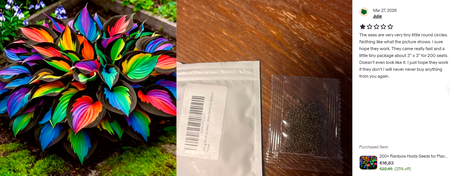
What you ask for vs. what you get. Image: Etsy
A simple search for “rare plant” reveals numerous accounts selling seeds and bulbs of nonexistent species. These items are often accompanied by the dubious defense of “wait for it to grow” if buyers complain. However, many enthusiasts are catching on; those seeds do not correspond to the advertised plant.
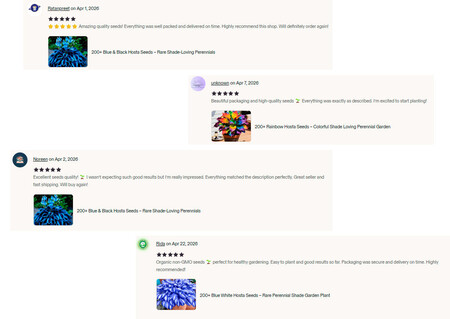
Some positive comments from various accounts.
Many so-called positive reviews are as fake as the plants themselves. The language used is often algorithmic, filled with emojis, and shows clear signs of being AI-generated. Furthermore, these accounts appear to be interconnected, with several newly created accounts only following AI plant shops.
Having reported one such store to Etsy, I found it curious that their reporting system mainly addresses handmade items and adult content, but not scams or AI-generated content.
To steer clear of scams, it’s best to research any plant variety thoroughly. There are genuinely unique plants, like the Begonia Ferox, Caladiums, or certain Calatheas that could seem artificial but exist in reality.
AI as a Plant “Doctor”
AI also plays a role in plant care. Many hobbyists turn to chatbots like ChatGPT to diagnose issues with their plants or to obtain care instructions. A myriad of apps for plant care now integrates AI functionality.
A troubling trend emerges: AI tends to provide answers that are agreeable but often incorrect. In the realm of plant care, this could be detrimental.
Advice from AI frequently lacks reliability. Users have reported suggestions such as using milk for watering (which lacks scientific merit) or attempting to propagate a plant using a leaf tip (spoiler: it’s not possible). A notorious Reddit user received the advice of using thrips as a natural pest control, not realizing that thrips are themselves a pest.
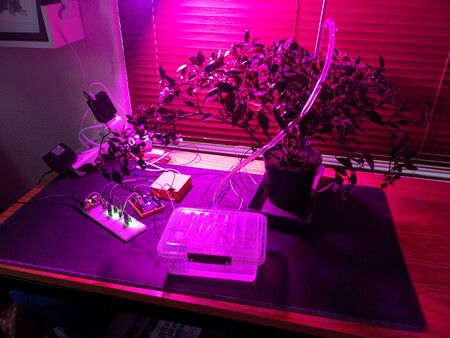
The ‘PlantMom’ experiment. Image: Liam Kloppers
A striking case involved an experiment by Liam Kloppers dubbed ‘PlantMom’. An AI system was set up to care for a chili plant using various sensors for light, temperature, and humidity. The outcome? The AI misinterpreted the data, turning off the grow light and overwatering the plant, nearly drowning it.
AI is also utilized for plant identification through apps and chatbots. However, caution is necessary; AI will prioritize giving an answer rather than admitting it doesn’t know. Sometimes this doesn’t carry grave consequences, but it’s a risk nonetheless.
In conclusion, as AI continues to expand its reach into unexplored territories, it brings both convenience and challenges. Plant enthusiasts must remain vigilant to differentiate between reality and illusion in this increasingly blurred landscape.