
Back in 1941, Isaac Asimov already played with an idea that for decades sounded more like literature than infrastructure: capture solar energy in space and send it back to Earth. It posed a question that today no longer belongs only to science fiction: What do we do when the energy available down here is not enough to sustain what we want to build? More than eighty years later, that question has found a new protagonist: artificial intelligence.
The Growing Energy Demands of AI
In recent years, there has been a swift race to build AI infrastructure. More models, servers, and data centers are sprouting up, and with them comes an increasing need for stable electricity. Meta has identified a crucial problem: current clean energy sources, while beneficial, have inherent limitations concerning continuous supply. Solar energy doesn’t produce power at night, winds are unpredictable, and our energy grids require extensive storage solutions to convert intermittent energy into a reliable source for operations.
Meta’s Innovative Energy Partnerships
Meta has recently signed two impactful agreements to tackle these energy challenges from different angles. The first agreement is with Overview Energy, a startup that provides up to 1 GW capacity of orbital solar power to support Meta’s data center operations. The second agreement with Noon Energy aims for up to 1 GW/100 GWh of long-duration storage capacity. By combining generation and storage, Meta hopes to create a more steady energy supply.
Orbital Solar Power: The Future of Energy Generation
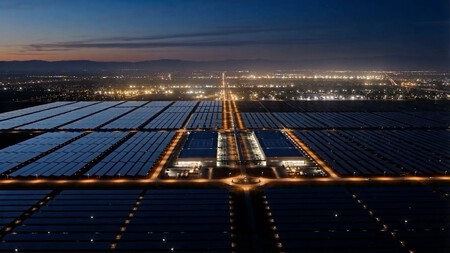
Overview Energy proposes a concept that is straightforward in theory but complicated in practice. Its satellites would remain in geostationary orbit above the Earth’s equator—an area where sunlight stays consistent. These satellites would collect solar energy and transmit it back to existing solar installations on Earth as low-intensity near-infrared light. According to Meta, these facilities are equipped to convert that light into electricity and inject it into the grid, effectively utilizing sunlight even during hours they typically remain inactive.
Plans for Demonstration and Commercial Use
Meta has positioned this technology as being in an early phase, with Overview planning an orbital demonstration in 2028. This system aims to send power wirelessly from space to a solar plant on Earth for the first time. If successful, commercial delivery to the U.S. grid could commence as early as 2030, but considerable challenges remain, including proving scalability and economic viability.
Long-Duration Energy Storage with Noon Energy
The second agreement focuses on the equally critical issue of energy storage. While generating clean energy is vital, it is equally essential to conserve it for extended periods. Noon Energy utilizes reversible solid oxide fuel cells and carbon-based storage to offer over 100 hours of storage—significantly exceeding the current performance of lithium-ion batteries, as stated by Meta.
A Broader Energy Strategy
These two alliances are part of a larger energy strategy. Meta claims to have already contracted more than 30 GW of clean and renewable energy. These agreements complement ongoing geothermal projects with Sage Geosystems and XGS Energy, along with 7.7 GW of nuclear energy linked to notable companies like Vistra, TerraPower, Oklo, and Constellation Energy. This paints a clear picture: AI is not just pushing technology firms to acquire more chips; it is also compelling them to seek electricity in progressively unconventional avenues.