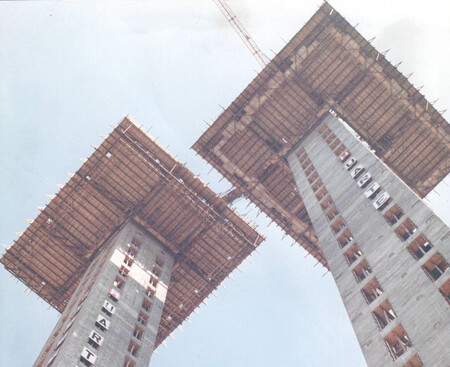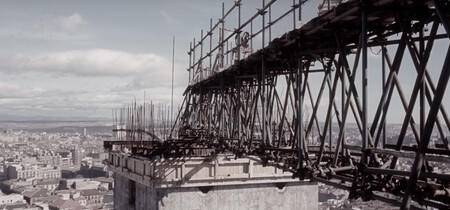
Here in Madrid, we are captivated by megastructures, but the story of the Colón Towers transcends mere size and grandeur. This architectural marvel challenges conventions and concretizes the phrase “start the house with the roof.” Built with innovative techniques, this skyscraper is a testament to what creativity can achieve in urban landscapes.
Architectural Innovation: Constructed from Top to Bottom
Renowned architect Antonio Lamela, who spearheaded the Colón Towers, believed that traditional tower construction could only succeed if built from the top down. This radical approach was necessitated by the irregular dimensions of the 1,710 square meter plot, which required significant underground parking space due to municipal regulations. Lamela’s inventive vision gave birth to a double-tower structure that was unique not just in its form but also in its methodology.
This strategic decision to create two towers, rather than a single building, was driven by the architect’s desire to maintain an aesthetically pleasing skyline. Positioned in the heart of Madrid, these towers adhere to City Council guidelines that called for a vertical architectural unit.
The Unique Engineering Behind the Towers
The towers stand tall with 23 floors above ground and six levels below, all crafted through a revolutionary suspended architectural technique. The floors hang from each other and are not reliant on lower levels for support. Essentially, a narrow central core supports the entire structure, allowing the upper floors to be constructed downward—a remarkable feat in engineering.
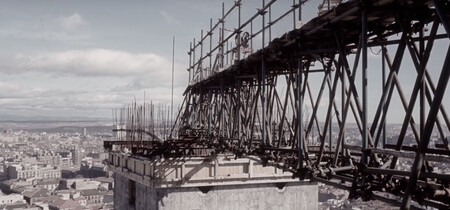
Image: Estudio Lamela
Transformative Challenges and Changes
The Colón Towers underwent significant revisions throughout their development. Initially, the design utilized folded sheet metal facades and anodized aluminum; however, these concepts evolved into a double-layered glazed exterior to enhance thermal and acoustic comfort. This alteration not only added aesthetic value but also increased the functionality of the spaces within.
Interestingly, the green art deco crown of the towers, popularly referred to as “the plug,” was not an original design element but rather a structural necessity imposed later to comply with fire regulations.
Political Intrigues and Delays
Construction began in 1967, but after just three years, political challenges halted the project. The Madrid City Council suspended work due to political interests, which inevitably led to legal disputes. The original plan for luxury residences morphed into office spaces, but the building was eventually completed in 1976.
A Legacy of Innovation
The Colón Towers have been recognized as one of the most technologically advanced buildings of their time, featuring prestressed concrete innovations. As time progressed, the techniques pioneered here laid the groundwork for modern architectural solutions, influencing many, including renowned architect Norman Foster.
Today, Antonio Lamela’s vision remains an integral part of Madrid’s skyline, embodying both the triumphs and complexities of urban architecture. As plans for potential future renovations linger in the air, this unique building stands as a testament to what can be achieved when ingenuity meets necessity.