
Abbas Araghchi’s Visit to Russia Amid Stalled US-Iran Negotiations
Date: April 27, 2026
Iran’s Foreign Minister Abbas Araghchi recently visited St. Petersburg to engage in discussions with Russian President Vladimir Putin. This meeting comes at a crucial time as negotiations between Iran and the United States remain stalled, primarily due to the ongoing military conflict and geopolitical tensions.
A Strategic Meeting
Araghchi emphasized the importance of consulting with “our Russian friends” regarding recent developments, suggesting that both nations are keen to reassess their strategies in response to the current diplomatic deadlock with Washington. The Iranian official’s remarks were made to the state agency IRNA as he arrived in Russia, highlighting the significance of close cooperation between the two countries.
Proposal to Lift the Blockade
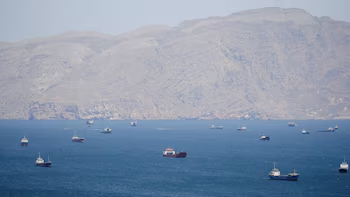
Amidst these consultations, Tehran has proposed lifting its blockade of the Strait of Hormuz, a strategically vital stretch of water for global oil trade. Notably, this proposal does not involve Iran’s nuclear program, which has been a major sticking point in prior negotiations.
The initiative was relayed to Washington via Pakistan and includes demands for the US to lift its blockade on Iranian ports. However, US President Donald Trump insists that any lasting agreement must include provisions for dismantling Iran’s nuclear capabilities.
International Reactions
In a parallel development, China weighed in on the situation by rejecting US sanctions against the Hengli Petrochemicals refinery, which had purchased Iranian crude oil. Chinese Foreign Ministry spokesperson Lin Jian stated, “We firmly oppose illegal unilateral sanctions,” demonstrating China’s commitment to its longstanding partnership with Iran.
The Broad Geopolitical Picture
This ongoing situation stems from a complex matrix of interests. The military dynamics and economic sanctions significantly influence the interactions between the US, Iran, and their global partners. Reports indicate that global military spending rose to $2.89 trillion in 2025, with increased defense budgets in Europe and Asia contributing to a 2.9% rise from the previous year.
Despite a slight decrease in US military spending, the overall trend reflects heightened global military readiness amid rising tensions, particularly in the Middle East.
The Context of the US-Iran Stalemate
Further complicating matters, Trump has publicly stated he is in no rush to negotiate with Iran, emphasizing that sanctions will persist until Iran curtails its nuclear development. This reflects a strategic approach aimed at leveraging time as a tool of geopolitical pressure.
US Naval Blockade in the Strait of Hormuz
The situation is intensified by the US’s recent actions in the Strait of Hormuz, where it prevented the entry of 38 commercial vessels to maintain pressure on Tehran. US Treasury Department reports suggest that this blockade impacts 90% of Iran’s maritime trade, thereby limiting Tehran’s financial resources amidst ongoing negotiations.
Conclusion
The high-stakes dynamics involving Iran, the US, Russia, and China continue to unfold against a backdrop of military posturing, economic sanctions, and geopolitical maneuvering. As negotiations remain stalled, the world watches closely to see how events will evolve in this tension-laden environment.