
The Rise and Fall of Alcorcón’s Cultural Ambition
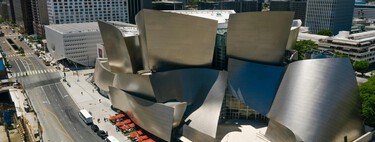
Many cities have pursued the idea that a single building could change everything, attract tourism, and redefine their identity almost overnight. The obsession has a very specific origin: the impact of the Guggenheim Museum in Bilbao, which transformed the city’s economy and global image. Its 1997 inauguration marked a significant turning point, leading to a wave of ambitious urban projects infused with this “Bilbao Effect.” Cities worldwide sought to replicate the model without fully understanding their own contexts.
A Guggenheim in the Suburbs
In the early 2000s, amid a booming real estate market, Alcorcón aimed to achieve its own cultural renaissance. The city planned an enormous project—a cultural complex comprising nine interconnected buildings, meant to place Alcorcón on the international art map. This ambitious vision included an auditorium, conservatory, and even a permanent circus. However, it quickly became apparent that the project was wildly disproportionate to the city’s economic landscape.
A Half Giant
Construction commenced in 2007 with lofty budgets. Yet, as natural delays crept in, costs began to spiral. The budget ballooned due to project modifications, and difficult decisions were made—like demolishing a nearly new library to facilitate new construction. When the 2008 financial crisis hit, construction halted with about 70% completion and over 100 million euros already invested. What was intended to be a cultural landmark instead became an unfinished skeleton without a clear purpose.
The Hidden Cost of an Impossible Project
Beyond the initial financial commitment, the CREAA (Centro de Creación de Artes de Alcorcón) also had broader economic consequences for the municipality. Funded through public resources, it accumulated staggering debts. Estimates indicated tens of millions more needed to finish the project, alongside millions in annual maintenance costs, rendering it a lingering burden rather than an asset for the community.
The building’s design greatly hindered its operational functionality. Its complex nature meant that activating a single area required deploying the entire system, escalating costs and making partial usage unfeasible.
Nobody Wants the “Guggenheim” of Alcorcón
Over the years, the structure became a symbol of unfulfilled promise, passed from one investor to another without yielding any results. Proposals ranged from establishing an NBA campus to developing a sports university or a large Buddhist center promoted by Richard Gere—yet none materialized. More recent ventures, such as creating an audiovisual hub, faced similar challenges, as the financial realities thwarted any sustainable development.
From Cultural Icon to Symbol of Excess
What was once envisioned as an emblematic project has instead become an example of excessive planning in Spain, one that aimed to alter the city’s identity but ultimately constrained its public narrative. The large iron and concrete monolith, sitting unfinished, sparked debates about public spending on grand cultural projects. Its imposing presence now serves as a cautionary tale about unchecked ambition and overspending in urban planning.
A Partial Ending to an Unfinished Story
In recent years, some areas of the CREAA have begun to find utility, hosting a victims’ care center among other initiatives. However, the entirety still falls short of its initial vision. More than a decade later, the complex is slowly reactivating in bits and pieces, now focusing on pragmatic needs rather than grand ambitions. This ongoing saga underscores the lesson that merely building large structures does not guarantee a city’s transformation—it merely sets the stage for a more complex set of challenges ahead.