
## Marcelo Bielsa’s Rant: A Critical View on World Cup Changes
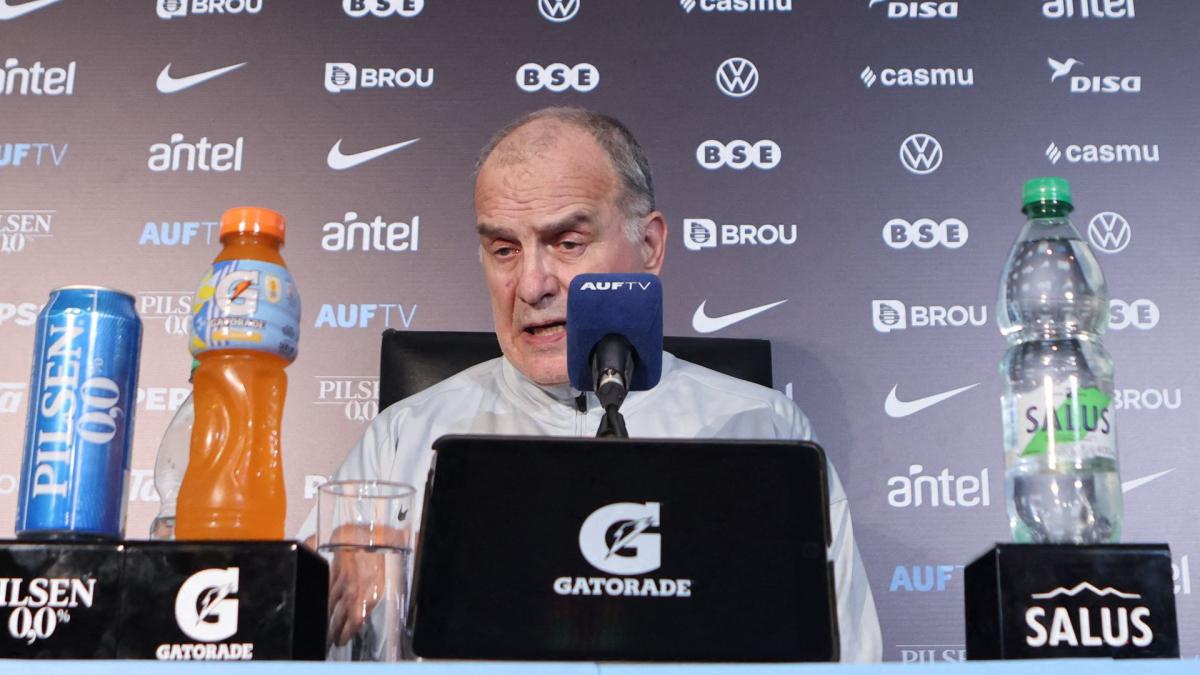
Uruguay’s head coach Marcelo Bielsa has recently stirred the pot with his outspoken criticism of one of FIFA’s significant changes for the 2026 World Cup: the introduction of cooling breaks. During a press conference, Bielsa voiced his strong opposition, arguing that the modification fundamentally alters the essence of football. His assertion that “playing four periods instead of two alters the very concept of football” reflects his deep-rooted commitment to maintaining the traditional structure of the game.
### The Essence of the Game at Stake
Bielsa has been an influential figure in football, known for his tactical acumen and philosophy. In his critique of the cooling breaks, he suggests that the new rule transforms the natural rhythm and dynamics of matches. By segmenting the game into four periods instead of two halves, the fluidity that football traditionally offers is compromised. “It makes no sense,” Bielsa lamented, highlighting his conviction that such changes disrupt the fundamental nature of the sport.
### Commercial Interests Over Integrity?
Bielsa didn’t stop at simply critiquing the cooling breaks as a sporting change; he also hinted at potential ulterior motives behind the decision. He insinuated that these interruptions might cater more to commercial interests rather than addressing genuine climatic concerns. “We did not think about the consequences that this could have on this sport, but rather about another type of repercussions,” he said, suggesting that the motivations might be more about consumer engagement and television ratings than about the players’ welfare or the integrity of the game.
### The VAR Conundrum
While critiques surrounding cooling breaks dominated the discussion, Bielsa also took the opportunity to defend VAR (Video Assistant Referee). He views this technology as a progressive step for football, aimed at reducing the impact of human error on the game. This juxtaposition highlights Bielsa’s nuanced understanding of football; while he strongly opposes change that disrupts the traditional game structure, he supports innovations that enhance fairness and accuracy.
### Looking Ahead: A Critical Match Against Cape Verde
On the eve of Uruguay’s crucial match against Cape Verde, Bielsa’s comments resonate even more powerfully. After the team faced a disappointing 1-1 draw against Saudi Arabia, the need for a cohesive and unchanged game plan is vital for a team seeking to regain its footing. His passionate statements may serve as a rallying call for players and fans alike, emphasizing the importance of authentic football amidst impending changes.
### Conclusion
Bielsa’s outburst serves not only as a critique of FIFA’s cooling breaks but also as a wider commentary on the direction in which football is headed. As the 2026 World Cup approaches, the dialogue surrounding these changes will surely continue, fueled by passionate voices like Bielsa’s. With the eyes of the football world on his team, the upcoming matches could be crucial in determining the balance between tradition and innovation in the beautiful game.