
Wireless Charging for Drones: A Game Changer in Aerial Technology
Wireless charging isn’t just a comfort for everyday devices; it’s evolving into a strategic advantage in various domains. China is actively experimenting with keeping fleets of drones airworthy almost indefinitely, utilizing microwave charging systems that inject energy from the ground.
Innovative Approach from Xidian University
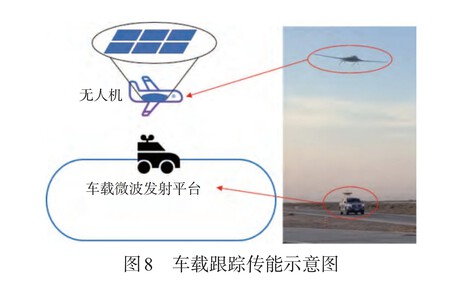
Recently, researchers from Xidian University published a groundbreaking study in the journal Aeronautical Science & Technology. They detailed a microwave emitter system capable of transferring energy to antennas mounted on drones. This innovative technology allows these aerial vehicles to recharge while in motion, eliminating the impracticalities of stationary charging.
How the System Works
The key to this technology lies in a GPS positioning system that synchronizes the drone’s trajectory with that of the ground-based transmitter. As the microwave emitter on the ground aligns with antennas on the drone, energy is transferred effectively. In tests, fixed-wing drones managed to stay airborne for up to 3.1 hours at an altitude of 15 meters, contingent on the fuel of the ground vehicle.
The Indefinite Autonomy Advantage
The potential for indefinite flight extends beyond pure battery efficiency. A drone utilizing this microwave system can afford to have a smaller battery, thereby reducing overall weight and allowing for greater payload capabilities. Such autonomy could enhance operational flexibility in various scenarios, from surveillance to logistical support.
Challenges and Inefficiencies
Despite its promising design, the current system suffers significant inefficiency. The estimated effectiveness of the microwave beam is only between 3% and 5%, meaning that a considerable amount of energy is wasted. This inefficiency presents a formidable obstacle to using the system at scale.
Microwaves vs. Lasers
One might wonder why a laser system isn’t employed instead. While lasers offer improved precision and longer ranges, they are susceptible to environmental interferences such as fog or dust. Microwaves, in contrast, act like a shotgun—providing a wider range of effectiveness, albeit with the disadvantage of significant energy loss.
Global Context: A Shared Race for Technology
China isn’t the only player in this cutting-edge field. U.S. agency DARPA is also exploring ways to charge drones remotely via radio frequencies and lasers. Meanwhile, Germany’s Rheinmetall is developing wireless charging platforms aimed at unmanned ground vehicles. The international competition illustrates the growing importance of drone capabilities in modern warfare.
Conclusion: The Future of Drone Warfare
While the advancements from Xidian University are significant, they highlight just one step toward integrating drones as invaluable assets on the battlefield, as evidenced by recent conflicts. As we move forward, the need for more efficient power transfer systems will remain a focal point for military applications and drone technology.