
The Artemis II Launch: A Historic Event with Unforeseen Issues
On April 2, we witnessed a historic event: the Artemis II mission successfully launched towards the Moon after over 50 years. However, the lead-up to this monumental launch was anything but smooth, with multiple delays and technical issues occurring even at the last moment.
Last-Minute Technical Anomalies
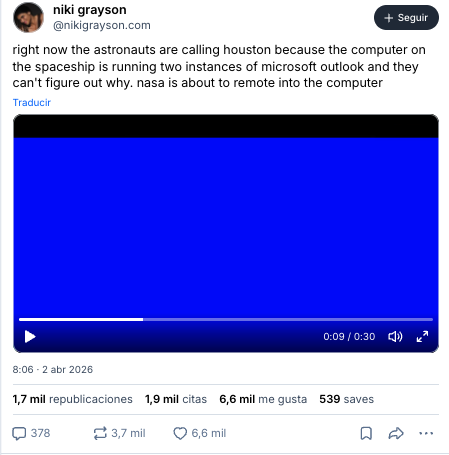
In the hours leading up to the launch, teams had to address anomalies, including a temperature sensor issue in the battery abort system and problems with the flight termination system, crucial for the rocket’s safety. During flight, approximately 150,000 kilometers from Earth, Commander Reid Wiseman encountered an all-too-familiar problem: an Outlook crash.
The Incident During Launch
This malfunction was captured live during the broadcast, approximately 13 hours and 15 minutes in. Wiseman expressed his difficulty with two non-functional Microsoft Outlook accounts, humorously requesting remote assistance. Initially, he had concerns about the Optimus software but soon discovered that two instances of Outlook were inadvertently running on his device. This amusing anecdote likely marks the first technical support ticket filed from space.
The Broader Implications
The Artemis II mission is historic for various reasons, not least of which includes highlighting the fusion of cutting-edge technology with everyday software glitches. When an organization standardizes on a single technological ecosystem, it opens itself up to the vulnerabilities of that system. Thus, the challenges faced by Wiseman serve as a reminder that even in space exploration, technical malfunctions can occur.
A Support Ticket from the Moon
After Wiseman reported the issue, the technical team back on Earth quickly took action. Houston accepted the request for remote access to Wiseman’s device—a procedure reminiscent of corporate IT support. About an hour later, they reported that Outlook was back online, albeit in “offline” mode.
Microsoft’s Strategic Partnership with NASA
The use of Microsoft software aboard the Orion spacecraft isn’t arbitrary. Microsoft is a strategic partner of NASA, providing essential tools for everything from productivity to artificial intelligence. Astronauts utilize Microsoft Surface Pro devices running Commercial Off-The-Shelf software, which allows them to perform tasks like communicating with family and managing personal media. However, mission-critical systems are supported by specialized hardware and software designed to withstand the rigors of space.
Additional Technical Challenges: The Toilet Trouble
Wiseman’s Outlook issues were not the only glitches. Roughly two hours post-launch, NASA reported a malfunction in the waste management system: the urine extractor fan jammed. Thankfully, this issue was addressed quickly, ensuring astronaut comfort and hygiene in microgravity.
Conclusion
The Artemis II mission has reaffirmed that even in groundbreaking space exploration, technology can fail in real-time. The humorous yet serious Outlook debacle reminds us that whether on Earth or in space, technical issues persist, affecting scientific missions far beyond our atmosphere.
For further updates and insights from the Artemis II mission, stay tuned to NASA’s official channels.