
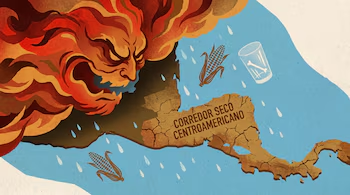
Dry Corridor on Alert: Droughts, Violence, and Aid Cuts in Guatemala and Honduras
The Crisis Scenario in the Dry Corridor
The Central American Dry Corridor is currently facing severe challenges due to prolonged droughts, escalating violence, and a significant reduction in humanitarian aid. According to a joint report from the Food and Agriculture Organization (FAO) and the World Food Program (WFP), this region has been identified as a critical focus area requiring urgent intervention from June to November 2026.
In Guatemala, around three million people are classified as food insecure, with approximately 250,000 facing acute emergency conditions. In neighboring Honduras, the situation mirrors this alarm, with 1.6 million individuals in crisis or worse, and at least 62,000 in extreme conditions jeopardizing their survival.
The Impact of Drought and Violence
The primary drivers behind this crisis include the El Niño phenomenon, compounded by the reliance on vulnerable crops such as corn and beans. The reduction in rainfall during the main agricultural season has shrunk planting areas and diminished harvests. Consequently, many families are forced to rely on unstable and costly food markets, exacerbated by inflation and difficulties in accessing essential goods.
This scenario increases the vulnerability of rural households, already at the mercy of external factors beyond their control.
Haiti: A Spotlight on Severe Needs
In the Caribbean, Haiti remains the most affected country. The combined effects of ongoing armed violence, internal displacement, and economic collapse leave an estimated 5.8 million people—comprising 52% of the population—in a food crisis or worse. Among these, 1.8 million are facing emergency conditions, representing the highest figures recorded since measurements began.
Escalating Food Inflation and Economic Instability
Compounding these challenges, food inflation has surged to nearly 24% as of February 2026. The decline in remittances further strains access to essential food items. Although there have been short-term improvements in inflation rates and agricultural conditions, Haiti, like Guatemala and Honduras, remains under severe threat from future droughts influenced by El Niño.
A Broadening Crisis Beyond Central America
The FAO and WFP report extends its findings beyond the Americas, spotlighting crises in countries like Sudan, South Sudan, Nigeria, and Somalia, where millions face hunger without adequate humanitarian support. The overall narrative illustrates the intricate ties between climate instability, armed conflict, and economic crises, reinforcing the urgency of intervention.
Strategies for Resilience and Prevention
The FAO and WFP highlight that prevention is more effective than reactive measures. Sustainable solutions include enhancing early warning systems, strengthening anticipatory interventions, and fostering coordination between humanitarian and development efforts. Building resilience within communities—defined as their capacity to recover from shocks—is crucial to effectively navigate these crises.
Conclusion
The situation in the Dry Corridor warrants immediate global attention, as the nexus of climatic events, violence, and reduced aid places millions at risk. Without a robust response and targeted strategies, the specter of famine looms ominously over Guatemala, Honduras, and beyond, emphasizing the need for urgent action to secure food access for the most vulnerable populations.