
The Journey of Artemis II: Capturing the Night Sky
The Artemis II mission launched on April 2, and just two days later, it’s already positioned closer to Earth than to the Moon. Thanks to the Artemis Real-time Orbit Website (AROW), enthusiasts can track the Orion spacecraft’s journey in real-time. The astronauts aboard, utilizing high-tech equipment including iPhones and Nikon D5 cameras, are set to capture some extraordinary images of the universe.
A Glimpse Back to Earth
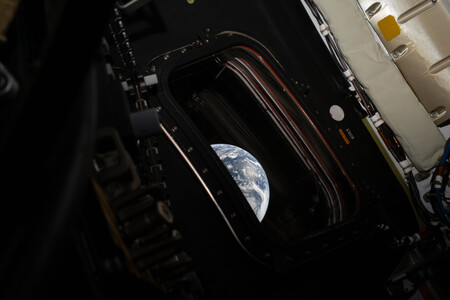
One of the standout images taken by Reid Wiseman, the mission commander, shows Earth as viewed through one of Orion’s four windows. This breathtaking shot can be likened to a passenger’s typical photo taken from an airplane, but at an interstellar level, showcasing the beauty of our planet from space.
Unveiling a New Perspective
On April 3, NASA shared another stunning image titled “Hello World.” Captured by Wiseman after the translunar injection maneuver, this photo has redefined our understanding of Earth from orbit. In this image, viewers can appreciate the simultaneous visibility of both the Northern and Southern auroras.
The Night View: Earth’s Celestial Display
Distinct from many typical Earth images taken during daytime, this photograph showcases the planet’s night side. The electric green ribbons marking the auroras highlight our atmosphere reacting to solar winds, while a delicate orange layer above signifies atmospheric luminescence, known as airglow. Unlike the vivid energy from solar winds, airglow stems from chemical reactions in the upper atmosphere, releasing energy accumulated during daylight.
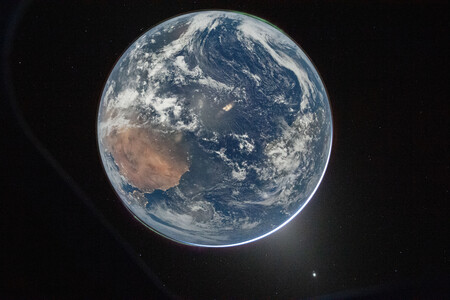
Earth from the perspective of Artemis II. POT
Capturing the Cosmic Dust
Adding to the intrigue is the visibility of zodiacal light—a faint, diffuse glow that extends across the plane of the planets’ orbits. This cosmic dust reflects sunlight, showcasing details that become evident only in the absence of atmospheric interference. For photography enthusiasts, the image settings reveal an ISO of 51,200 with long exposure, perfect for capturing the faint lights from cities and the auroras.
Conclusion: A Glimpse into the Universe
The images released by the Artemis II mission offer a rare and stunning view of Earth from space. These insights into our planet’s night side, paired with the mesmerizing displays of auroras and cosmic dust, demonstrate the beauty and wonder of our universe. NASA continues to share incredible visuals, allowing us to appreciate the cosmos like never before.
To explore all photos shared by the Artemis II team, visit NASA’s dedicated gallery here.