
The Impact of Recent U.S.-Israeli Operations on Iranian Leadership
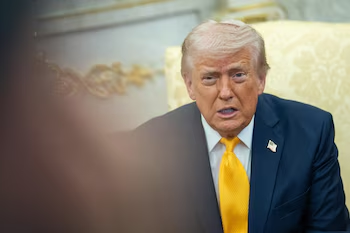
Donald Trump’s recent remarks regarding the political landscape in Iran highlight a significant shift following a series of targeted attacks by the U.S. and Israel. Speaking at a White House awards ceremony, he characterized the current absence of key Iranian officials as a strategic advantage for his administration.
A New Era of Iranian Vulnerability
Since the joint operations commenced on February 28, the Iranian regime has experienced unprecedented losses, including the death of Supreme Leader Ali Khamenei. According to Trump, this has left Iran with “no one to talk to,” as the elimination of senior figures has caused a profound disruption in its governance structure. Trump dismissed the political ramifications of these casualties and noted that it drastically limits the U.S. options for diplomatic negotiations.
The Dismantling of Iranian Military Assets
Trump emphasized that the attacks have effectively dismantled the Iranian military apparatus. “The Navy is gone, the Air Force is gone. Their radars are gone. Everything is gone,” he stated, reflecting his interpretation of Iran’s vulnerability following the assaults. This declaration indicates a strategic belief that the disarray within Iran’s military leadership hampers its capacity to mount organized responses, thus bolstering U.S. foreign policy objectives.
The Strategic Implications of Leadership Vacuums
The absence of successors and the rapid turnover of leadership demonstrate a troubling trend for the Iranian regime. Trump remarked, “No one wants to be a leader there. They are having a bad time,” suggesting that the lack of effective leadership aligns with U.S. interests. The notion of having “no one to talk to” becomes a strategic boon from Trump’s perspective, allowing for increased pressure on Iran without the need for dialogue.
Selective Attacks: A Policy of Success?
Various media outlets have indicated that Trump’s administration views these operations as successful. Despite international condemnation from Tehran, the U.S. interprets these tactics as having the desired effect on Iran’s governmental and military frameworks. The strategy of selective attacks is believed to create a power vacuum that further complicates Iran’s leadership reorganization.
Rising Tensions and Regional Implications
Amid these military operations, regional tensions continue to escalate as Iran voices its grievances to international bodies. The regime has labeled the strikes as selective assassinations, further aggravating internal political instability. Observers note a concerning silence from Iranian officials, which could indicate a deepening crisis within the leadership.
Conclusion: A Calculated Stance
Trump’s statements mark a departure from traditional diplomatic approaches, where having interlocutors was deemed essential for negotiations. By embracing the current chaos in Iran as advantageous, the administration seems committed to maintaining its aggressive stance without the necessity of conversation. As the political landscape evolves, the long-term consequences for both U.S. policy and Iranian stability remain to be seen. The ongoing situation is a critical area for observation as it unfolds.
This development signals not merely an immediate tactical victory but raises questions about the broader implications for peace and stability in the region.