
Overview of the Investment in Vaca Muerta
The significant investment landscape in Vaca Muerta is about to expand, with Pampa Energía seeking to enter the RIGI (Regime of Promotion of Investments in Hydrocarbons) with a USD 4.5 billion project. This announcement follows the government’s initiative to create a stable fiscal framework for large investments, aimed at bolstering the country’s hydrocarbon sector.
Pampa Energía’s Project Details
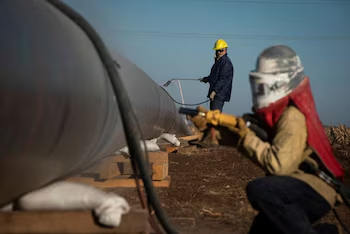
Pampa Energía’s proposal focuses on the upstream development of the Rincón de Aranda field in Neuquén. This investment will primarily fund oil production enhancements and the construction of treatment plants, as well as vital oil and gas pipeline infrastructure. Minister of Economy Luis Caputo highlighted that this project would facilitate the drilling of over 100 additional wells in the region, significantly boosting production capacity.
Project Objectives
The inclusion of this project in the RIGI aims to accelerate production growth and sustain maximum extraction levels over an extended period. The government has made recent adjustments to the RIGI, enabling the integration of new greenfield hydrocarbon projects, thus broadening the scope for development opportunities.
Previous Investments and Future Outlook
Pampa Energía has been building momentum in Vaca Muerta since an asset swap with TotalEnergies in 2023, marking Rincón de Aranda as a strategic focus for its growth. Earlier this year, a related infrastructure request was submitted, estimating investments around USD 426 million to establish processing and transport facilities, linking the field to major pipeline systems.
Production Goals
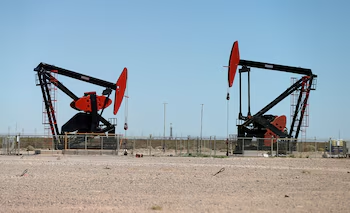
In 2025, production in the Rincón de Aranda field is anticipated to surge from fewer than 1,000 barrels daily to roughly 20,000 barrels per day by year’s end. The company plans to allocate around USD 770 million by 2026 to reach production levels of 25,000 barrels daily in the second quarter, progressing towards a target of 45,000 barrels per day by 2027.
RIGI’s Broader Impact
The RIGI regime has already approved 12 projects exceeding USD 25 billion, with an additional 32 requests totaling about USD 45 billion under review, potentially creating over 60,000 jobs. This strategic investment direction aims to transform the RIGI into a lasting state policy to position Argentina as an attractive destination for foreign investments.
Conclusion
The impending investment by Pampa Energía underscores the momentum in Argentina’s hydrocarbon sector, driven by regulatory enhancements and strategic planning aimed at both economic growth and increased energy output for the nation. The RIGI continues to serve as a catalyst for innovative projects that promise not only to enhance production capabilities but also to foster significant employment opportunities throughout the region.