
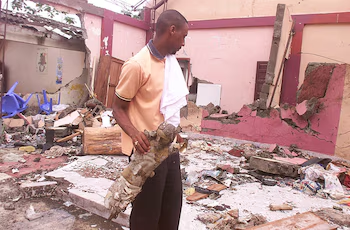
Heroes Exist in Colombia: The Story of Father Antún Ramos
In Colombia, the phrase “Heroes do exist” became a rallying cry in 2009, emphasizing the valiant efforts of countless members of the military committed to protecting civilians amid a decades-long armed conflict. However, the catastrophic events that took place on May 2, 2002, in Bojayá, Chocó, starkly illustrate how these heroes sometimes falter.
The Tragedy of Bojayá
On that fateful day, a violent confrontation erupted between the Revolutionary Armed Forces of Colombia (FARC) and the United Self-Defense Forces of Colombia (AUC), resulting in devastation for the residents of Bojayá. Amid a lack of state intervention and under dire conditions, nearly 600 people sought refuge in a local church, only to fall victim to a tragic bombing. The aftermath left 98 dead, including 48 children.
Father Antún Ramos: A Beacon of Hope
In the heart of despair was Father Antún Ramos, a young priest who became an unexpected hero. At just 28 years old, he stood his ground, sustaining injuries but remaining steadfast as chaos engulfed the community. When survivors looked to him for guidance, he sprang into action.
Antún described the harrowing moment: “What do we do, Father?” The question rang in his ears, urging him to take charge and lead the way toward safety. He later chronicled this experience in his book, Bojayá: The Account of the Priest Who Survived the Massacre, a poignant reminder of the resilience he demonstrated.
The March of Life
Faced with the terrifying screams of the frightened townspeople, Antún took the bold step of wrapping a white sheet around a stick, symbolizing peace amid the violence. “We are the civilian population! We demand respect for life!” he shouted into the chaos, bravely leading a makeshift march for survival. This act of defiance not only galvanized the remaining survivors but also sent a message to the armed groups embroiled in the conflict.
The Lasting Impact of Violence
The aftermath of the Bojayá tragedy left an indelible mark on both the community and Father Antún, who has spent years grappling with the emotional toll of that day. Even today, the mental scars of witnessing death and suffering linger as potent reminders of the conflict’s brutality.
Father Antún’s journey didn’t end in Bojayá; he later moved to Europe seeking refuge from threats that arose after the incident. Nevertheless, he returned to his calling in Chocó, now serving in Tutunendo, where he continues to uplift his community.
A Legacy of Silence and Service
Father Antún Ramos stands as a testament to the kind of heroism that often goes unrecognized. Unlike the militarized figures typically celebrated, he is a figure of compassion and resilience, dedicating his life to serve others without seeking accolades. His story encapsulates the idea that while the landscape of Colombia is marked by conflict, the true heroes lie within the compassion of the community members devoted to bringing peace and recovery.
Through his experiences and writings, Antún Ramos reminds us that in places shadowed by violence, acts of courage and selflessness illuminate the path toward healing and reconciliation.