
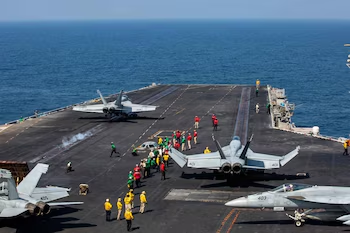
Iran’s Drone Strike Against USS Abraham Lincoln: An Escalation of Tensions
Overview of the Incident
On a recent mission in the Gulf of Oman, the USS Abraham Lincoln, a prominent U.S. nuclear aircraft carrier, was reportedly struck by drones launched from the Iranian Revolutionary Guard Corps (IRGC). According to Iranian state television, IRIB, the carrier was approximately 340 kilometers away from Iran’s maritime border when the attack occurred. Following the incident, the aircraft carrier, along with accompanying destroyers, quickly retreated, now situated over 1,000 kilometers from the initial encounter.
Context of Military Operations
This drone strike is set against the backdrop of heightened hostilities in the region. The Iranian Armed Forces have claimed it is a direct response to ongoing military operations involving the United States and its ally Israel. These operations reportedly began on Saturday and have resulted in significant casualties, with Iranian media reporting around 1,200 deaths within Iran.
The spokesman for the Khatam al Anbiya Headquarters described the action as a countermeasure against perceived increases in military pressure by the U.S. naval fleet, particularly as the USS Abraham Lincoln ventured close to crucial maritime areas like the Strait of Hormuz—an essential passage for global energy trade.
Previous Attacks and Escalating Tensions
Prior to the drone attack, the IRGC had also initiated a launch of four ballistic missiles targeting the USS Abraham Lincoln. American sources indicated that these missiles did not come close to the carrier, which remained out of range. This sequence of events underscores the rising tensions between the United States and Iran, especially in strategic waterways critical for international maritime operations.
The Strategic Importance of the USS Abraham Lincoln
Commissioned in 1988, the USS Abraham Lincoln is a Nimitz-class aircraft carrier, known for its role as a pivotal air power platform within the United States Navy. Although traditionally deployed in the Pacific, it has recently been active in the Persian Gulf, participating in various military campaigns, including the Iraq invasion. Its presence in the region symbolizes U.S. military power and influence, which is increasingly challenged by Iranian defensive maneuvers.
Iran’s Stance and the Warning Message
Iran’s military leadership has framed the drone attack as a warning against what they perceive as provocations from the U.S. fleet. Iranian officials emphasize a commitment to defending their territorial waters and have expressed readiness to counteract any perceived threats, marking this incident as a high-stakes confrontation with potentially global implications.
Vigilance in the Gulf of Oman
In response to the incident, U.S. naval forces have reassessed their positioning and maintained a heightened state of alert in the area, reflecting ongoing international concerns over security in the Gulf of Oman and the Strait of Hormuz. As military operations continue, the complex geopolitical landscape in this vital maritime corridor remains under critical scrutiny from global observers.
Conclusion: What Lies Ahead?
The drone strike on the USS Abraham Lincoln underscores not only the fragility of peace in the Gulf region but also the extensive implications of military actions in a highly sensitive geopolitical environment. With both sides entrenched in their positions, the potential for further escalation looms, highlighting the urgent need for diplomatic engagement to de-escalate tensions and ensure maritime security in one of the world’s most crucial trade routes.