
Florentino Pérez and the AI Opportunity
Florentino Pérez, known for his role in acquiring football superstars and his successful business ventures, is now strategically positioning himself at the intersection of construction and artificial intelligence (AI). Many might overlook his contribution to this sector, assuming his expertise lies purely in sports and traditional industries. However, Pérez recognized the potential of AI well before others, effectively leveraging this opportunity to elevate his construction company, ACS.
ACS: A Traditional Company with Innovative Outputs
ACS, while traditionally viewed as an uninspiring construction firm involved in laying bricks and asphalt, has dramatically transformed its operations. In 2025, the company reported a net profit of €950 million, a 15% increase from the previous year. This growth was largely ascribed to its American subsidiary, Turner, whose revenue contribution escalated by 66.6% to €549 million.
Turner’s Focus on Data Centers
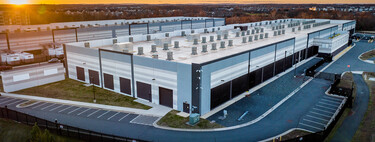
Unlike conventional construction firms, Turner’s specialization lies in building data centers, a sector poised to ride the coattails of the AI boom. This focus stems from a clear understanding: the advancement of AI requires extensive hardware infrastructures, which in turn necessitate large, secure buildings equipped with optimal cooling and power systems.
Significant Contracts and Revenue Growth
Success in the U.S.
Turner has made remarkable strides in the U.S. construction market, securing major contracts such as a 902-megawatt data center in Wisconsin and a stake in a $10 billion Meta campus in Indiana. These projects represent not just buildings but entire ecosystems designed to support the AI workforce of the future.
A Booming Market
In just five days, data centers generated over €9 billion in sales during 2025, while ACS has delivered more than 9 gigawatts (GW) of capacity globally—remarkable, considering Spain’s total installed capacity is hardly 7 GW. Despite being an understated player in the AI arena, ACS has benefitted significantly from its ventures in this sector.
A Skyrocketing Stock Performance
ACS’s stock has seen a staggering 115% increase over the past year, reaching nearly €110, and setting historical highs. While the broader construction sector has only seen a 20% rise, ACS attributes a significant portion of its sales—63%—to its operations in North America.
Building to Own
ACS aims beyond mere contract execution; it seeks ownership of the infrastructures it builds. The company formed a joint venture with BlackRock’s Global Infrastructure Partners, intending to develop a data center platform with an initial capacity of 1.7 GW. Furthermore, its acquisition of Dornan, an engineering firm focused on this infrastructure, illustrates its commitment to dominating the market.
Challenges Ahead: Currency Fluctuations
However, ACS faces challenges, particularly regarding currency fluctuations. With over 60% of its income derived from North America, a decline in the dollar against the euro can significantly impact profits. Analysts estimate that such currency effects subtracted more than five percentage points from net profit growth.
Future Optimism Amid Caution
While some analysts are cautious, anticipating that much of the growth potential in the AI market has already been factored into stock prices, ACS remains optimistic. They expect infrastructure spending to quadruple by 2034 and predict profits in 2026 will exceed €1 billion, marking a transformative period for the firm.
A Leader in the Data Center Construction Market
As of August 2025, Turner had a backlog of $39 billion in confirmed orders, positioning it as the leading data center construction company globally. The company has earned a reputation unmatched by its competitors in contracts with major tech players like Meta, Amazon, and Microsoft.
The Irony of Spain’s Digital Dependence
Interestingly, while Spain grapples with issues of digital sovereignty and infrastructure for AI, ACS is predominantly focused on building these facilities abroad, drawing 63% of its income from North America. Ironically, the very company that is paving the way for AI infrastructure is doing so almost exclusively outside its home country.