
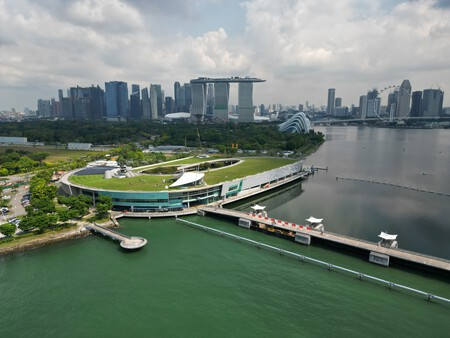
Drinking Tap Water in Asia: A Risky Proposition
Traveling across Asia, one common piece of advice you’ll hear is to “always drink bottled water.” This warning extends to various activities, from quenching your thirst to rinsing your mouth after brushing your teeth. Countries like Thailand, Vietnam, China, and India are known for having less-than-reliable tap water quality, prompting this caution. However, during a recent visit to Singapore, I was surprised to find a different reality: tap water here is not just safe to drink, it’s promoted as a symbol of national pride.
Singapore: An Anomaly in Water Quality
It is fascinating to learn that Singapore, despite its limited land and lack of natural water sources like large rivers or aquifers, boasts exceptional water quality. Traditionally, Singapore relied on its neighboring Malaysia for water imports. Thanks to innovative public policy and advanced engineering, the nation has developed one of the world’s most reliable water treatment systems.
The Four National Taps
In 2001, Singapore’s Public Utilities Board (PUB) took full control of the country’s water supply chain, embracing a holistic vision of water management. This comprehensive approach is evident in Singapore’s “Four National Taps,” which consist of:
- Local Water Sources: Utilizing rainwater collected in local reservoirs.
- Imported Water: Water still sourced from Malaysia.
- NEWater: High-quality water derived from treated wastewater.
- Desalinated Water: Water obtained from seawater through advanced desalination techniques.
Importance of Water Sustainability
Water quality in Southeast Asia can often be compromised due to pollution from industrial activities and inadequate sewage systems. For Singapore, relying on imported water is risky, especially given its geopolitical climate. Thus, NEWater represents an essential source of self-reliance. This water is engineered without dependence on rainfall or external sources, making it the cornerstone of Singapore’s water security.
Rainwater Collection and Traditional Systems
Singapore collects rainwater through a vast network of drains, canals, and rivers, effectively channeled through over 7,000 kilometers of pipes to its 17 reservoirs. This is coupled with advanced purification techniques to ensure that the water meets stringent safety standards.
NEWater: Turning Waste into Resource
NEWater, Singapore’s innovative approach to waste management, transforms used water into potable supply. This method is capable of covering up to 40% of Singapore’s total water demand and meets drinking standards that surpass even those set by the World Health Organization.
Desalination: A Growing Dependency
As part of its strategy to combat water scarcity, Singapore operates five desalination plants. While effective, desalination is an energy-intensive process and raises questions about sustainability. The ongoing efforts by PUB aim to minimize energy consumption in this area, making it a more viable option.
Challenges Ahead
Despite its advanced infrastructure, Singapore faces ongoing challenges in its water management system. The high energy demands of desalination and societal attitudes toward drinking water from reclaimed sources illustrate the complexities of maintaining a sustainable supply. With rising water demand, finding scalable solutions that can continue to deliver reliable water will be crucial for Singapore’s future.
Conclusion
In Singapore, drinking tap water is not merely safe; it represents a remarkable achievement in urban water management. This small island nation stands out as a beacon of innovation amidst a region where bottled water remains the norm.