
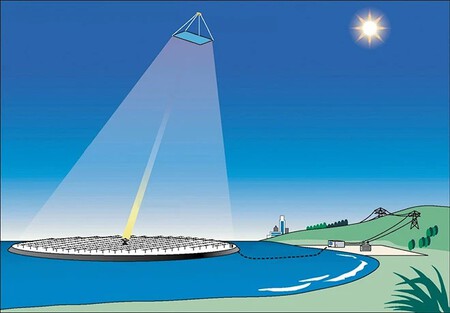
Harvesting Solar Energy from Space: A Sci-Fi Dream Becoming Reality
The concept of harvesting solar energy from space has piqued the public’s imagination since the writings of science fiction visionary Isaac Asimov, who explored this idea in his 1941 story “Reason.” Yet, the scientific conversation surrounding this visionary project began in earnest with aerospace engineer Peter Glaser’s groundbreaking article in Science magazine back in 1968. Fast forward to today, and countries like Japan are on the cusp of making this dream a reality.
The Current Landscape of Space-Based Solar Energy
Since Glaser’s initial proposal, organizations such as NASA, the California Institute of Technology, and Japan Space Systems have explored the viability of space-based solar energy. Among these entities, Japan is leading the charge, working towards a tangible solution for generating electricity in space and transmitting it directly back to Earth.
The Economic Context
The landscape is more favorable now than ever. The cost of launching rockets has significantly decreased, sparking renewed interest in renewable energy sources, particularly solar energy. However, the challenge remains: solar energy systems require large land areas for photovoltaic panels, which is problematic for densely populated or land-scarce nations like Japan.
Advantages of Space-Based Solar Energy
Solar energy collection in space possesses enormous advantages. Since there are no clouds and no nighttime in orbit, solar panels can operate continuously, maximizing efficiency and energy yield. This would significantly address two key limitations of terrestrial solar energy: intermittent sunlight and land use.
Significance of Energy Output
The business models being developed by Japan’s J-space systems propose a potential capacity of one gigawatt of constant power, enough to supply around 10% of the energy needs of a megacity like Tokyo. This capability resembles the output of a standard nuclear reactor, highlighting the transformative potential of this technology.
Ohisama: The Japanese Satellite Experiment
At the heart of Japan’s initiative is Ohisama, a satellite weighing 180 kg equipped with a solar panel the size of a door. Set to orbit at an altitude of 450 kilometers, it aims to produce 720 watts of electricity, which will be converted into microwaves and beamed to a 64-meter antenna in Nagano. The goal of this ambitious project? To demonstrate the feasibility of microwave energy transmission simply by lighting an LED.
Testing and Validation
While the power output of this initial test may seem modest, the real objective is to validate the transmission process through the ionosphere. Previous tests have been successful from a height of seven kilometers, but this next phase in orbit will provide critical insights for future scalability.
Upcoming Launch and Future Prospects
The window for launching Ohisama began on February 25, with the Kii Spaceport in Kushimoto designated as the launch site. If successful, Japan plans to implement larger solar panel arrays in geostationary orbit by 2040. These arrays could not only supply energy on Earth but also support lunar exploration missions.
The Challenges Ahead
Despite the excitement, hurdles remain. The Kairos 5 vehicle responsible for launching Ohisama has faced challenges in previous attempts, sparking skepticism about its reliability. Additionally, even a successful launch won’t guarantee seamless transmission; microwave diffraction poses significant risks, necessitating advanced antenna technology and phase control to ensure effective energy transmission across long distances.
Conclusion
The journey towards harvesting solar energy from space represents a paradigm shift in renewable energy strategies. With continued investment and technological advancement, nations like Japan are setting the stage for a future where energy is abundant, sustainable, and accessible from the stars.