
The Harrier’s Legacy in Spanish Naval Aviation
There was a time when Spain decided that it did not need the large aircraft carriers of the superpowers to have combat aviation at sea. Instead, it opted for a bold solution that fit its geography, naval ambitions, and resources. This decision became a hallmark for decades, deeply intertwining the Harrier with the Spanish Navy’s identity.
Pioneer in Stoppage Time
For nearly half a century, the Spanish Navy has built a unique identity in Europe by operating fixed-wing fighters from the sea without the need for large aircraft carriers. The Harrier served as a pivotal tool for deterrence and expeditionary support.
This strategic advantage positioned Spain as a global reference point since the seventies. The Harrier allowed Spain to deploy its capabilities in scenarios like the Balkans. However, the aircraft now faces a critical point, entering its final phase just as other operators are phasing out the model.
The Isolation of the Spanish Harrier
Two crucial developments outline the future of Spain’s aviation capabilities: the imminent withdrawal of the AV-8B Harrier from the United States Marine Corps and Italy’s transition to the F-35B. These movements signal that Spain may become the last operator of this aircraft globally.
This scenario is not just symbolic; it comes with practical implications. Spain finds itself facing a logistics chain that is rapidly shutting down, with production halted for over two decades. The Navy increasingly relies on one-off agreements and the cannibalization of parts, making the operational future of the Harrier precarious.
The Technological Abyss
While the Harrier remains effective for certain missions, it belongs to an era of air combat that differs significantly from today’s landscape. Information concentrated in the cockpit and pilot-centric survival mechanisms are outdated compared to modern systems.
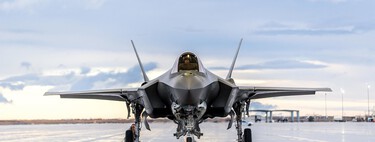
The F-35B promises to be a game changer. It functions not just as a fighter jet but as an intelligence node capable of real-time data distribution. For ships like the Juan Carlos I, this translates to a tactical advantage against adversaries. However, it seems Spain is reluctant to make the leap to this advanced platform.
A Strategic Dilemma Ahead
Thus, the underlying issue is not merely about selecting a new aircraft but defining Spain’s role in naval and expeditionary operations. Retaining the Harriers without a clear replacement could lead to a loss of operational capacity that would be difficult to reverse.
As time ticks away, and allies move forward, the Spanish Navy faces a decision that will shape its future capabilities for decades. The challenge lies in whether it will continue as a relevant player with embarked fixed-wing aircraft or accept a potential decline in its naval power.