
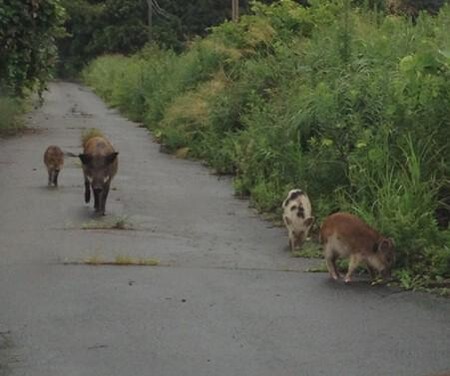
The Fallout of Fukushima: A Unique Ecological Experiment
March 11, 2011, marked one of Japan’s darkest days when a powerful earthquake triggered a catastrophic tsunami, leading to a nuclear disaster at the Fukushima Daiichi plant. This incident echoes with the historical tragedy of Chernobyl in 1986. However, the unfortunate chain of events following the Fukushima disaster gave rise to an unexpected ecological outcome—a fascinating “involuntary experiment” involving domestic pigs and wild boars.
Pigs on the Run
In the wake of the nuclear catastrophe, Japanese authorities mandated the evacuation of residents within a 20-kilometer radius of the power plant. Even those living up to 30 kilometers away were advised to stay indoors, which allowed many domestic pigs raised in nearby farms to escape into the surrounding forests, a habitat traditionally occupied by wild boar populations.
Nature’s XL Laboratory
This migration of pigs into the exclusion zone inadvertently transformed the area into a colossal ecological laboratory. As escaped pigs and wild boars began to intermingle, an unprecedented hybridization process unfolded, captivating the attention of researchers. Shingo Kaneko and Donovan Anderson from Hirosaki embarked on a genetic study to investigate the nuances of this unique animal interaction.
Findings from the Study
The findings revealed critical differences in reproductive patterns between the two species—wild boars reproduce annually, while domestic pigs can breed multiple times a year. The study noted that this accelerated breeding rate persisted even after the pigs’ escape, prioritizing maternal lineage as a mechanism for rapid genetic turnover.
Generational Acceleration
Researchers analyzed over 200 animals, capturing mitochondrial DNA and genetic markers from specimens over three years, from 2015 to 2018. The results were compelling: many hybrids had already diverged by five generations from the original domestic pigs, indicating an unusually rapid genetic renewal. As Kaneko stated, “The rapid reproductive cycle of domestic pigs is inherited through the maternal lineage.”
The Dilution of Domestic Traits
Interestingly, the accelerated reproduction did not equate to a stronger genetic influence of domestic traits. Instead, the analysis revealed a dilution of genetic characteristics from the domesticated pigs over successive generations. This phenomenon led to a quicker generational change in wild boar populations, as maternal pig lineages contributed to an increased turnover rather than prolonged domestic influence.
Ecological Implications
The implications of this research extend beyond the Fukushima exclusion zone. Hybridization between domestic and wild animals, particularly pigs and wild boars, poses ecological risks worldwide. The unique conditions post-Fukushima provided researchers with an extraordinary opportunity to study these interactions better. As Kaneko noted, understanding maternal lineage’s role in population dynamics can inform wildlife management and strategies for controlling invasive species.
Conclusion
The aftermath of the Fukushima disaster serves as a complex case study that may hold insights into animal hybridization and ecosystem management. While the event itself was tragic, the resultant ecological dynamics might help address broader issues related to hybridization between domestic and wild populations, offering pathways for effective wildlife conservation strategies.
Images | Max Saeiling (Unsplash), Wikipedia, Fukushima University