
The Divergent Paths of AI and Energy: A Global Perspective
In the global landscape of technological advancement, the United States excels in artificial intelligence (AI) with its abundant chip resources, while China emerges as a powerhouse in energy production. This dichotomy has led both nations to pursue different strategies that shape their future in emerging industries. Securing a reliable energy supply is key for both countries, especially as they delve deeper into AI, robotics, and advanced materials technology.
A Closer Look at China’s Energy Expansion
The Numbers Speak
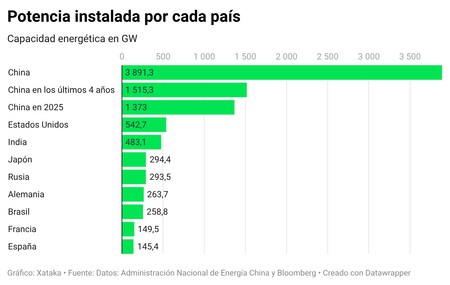
According to data from the China National Energy Administration, in 2025 alone, China added an impressive 542.7 GW of energy capacity, bringing its total to 3,890 GW. This increase signifies a 16.1% growth in just one year. Such numbers showcase that China’s energy advancements are not merely incremental but represent a significant leap forward.
Contextual Analysis
To put this into perspective, the 542.7 GW added in a single year surpasses the total energy capacity of countries like India, Germany, and Japan, according to the International Energy Agency. Over the past four years, China has expanded its energy capacity by an astounding 1,515.3 GW—more than the total capacity currently available in the United States.
Strategic Objectives
China’s aggressive energy strategy aims to create a stable and plentiful energy supply, thereby minimizing dependency on fuel imports. This strategic move not only fortifies its energy security but also provides a competitive edge in tech-intensive industries, paving the way for advancements in AI and robotics.
Engineering Marvel: Rapid Infrastructure Development
Historical Context
From an engineering standpoint, China’s rapid energy infrastructure development is nothing short of a marvel. It has created a power grid that rivals that of the United States in less than half a decade—a feat that took the U.S. approximately a century to achieve.
However, this monumental task requires extensive planning, logistics, and a skilled workforce. Building such infrastructure also involves navigating complex regulatory environments, environmental evaluations, and overcoming various logistical challenges.
Growth Driven by Renewable Energy
China’s push for renewable energy sources like solar and wind has been notable. The country’s strategy isn’t just about erecting solar panels and wind turbines; it involves enhancing the energy grid’s management to handle intermittency in renewable energy generation. Traditional energy sources, such as coal and gas, remain integral to its energy strategy, supplemented modestly by nuclear and hydroelectric energy.
The Challenges Ahead
The Solar and Wind Factor
While China’s current energy capacity is substantial, the intermittency of solar and wind energy poses challenges. Their plant factor—a measure of actual productivity compared to maximum potential—is lower than that of fossil fuel plants, necessitating higher installation rates to meet demand.
Energy Transportation and Storage
To efficiently transport energy from production sites, like the sunny Gobi Desert, to heavy industrial zones such as Shanghai, China has developed a high-voltage direct current (HVDC) network. This system includes the world’s largest ultra-high voltage transformer, marking a significant step in energy distribution.
Moreover, the challenge of energy storage remains crucial. China is heavily investing in lithium battery technology and hydraulic pumping systems to tackle this challenge.
In conclusion, while the United States continues to lead in AI chip production, China’s massive investments in energy infrastructure signify a strategic advantage in supporting emerging technologies. As both nations navigate their unique paths, the balance of power in the world of AI and energy continues to evolve.