
The Aging of Europe: A Demographic Crisis
The old continent is older than ever. With an average age approaching 50 years, Europe finds itself in a demographic crisis. The birth rate is low, hovering around 1.38 babies per woman, far below the replacement level of 2.1 needed to sustain the population. In fact, Europe’s population is shrinking for the first time since the Black Death, raising crucial questions about its future.
Comparing Birth Rates: Europe vs. Nigeria
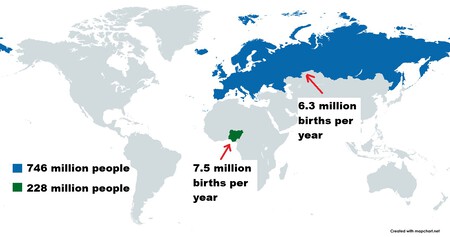
According to Eurostat, Europe recorded around 3.6 million births in 2023 for a population of approximately 450 million. Expanding this to include regions like the United Kingdom and Russia raises the total birth count to about 6.3 million. However, this figure pales in comparison to Nigeria’s staggering 7.5 million births in the same year, driven by a birth rate of 4.5 babies per woman and a median age of just 18, which signals growth in a significant demographic.
The Visual Impact: A Map of Demographic Disparity
Data visualizations, such as those from Brilliant Maps, starkly illustrate this demographic challenge. A single country, Nigeria, surpasses an entire continent in birth figures despite its smaller land area, showcasing the rapid population growth of Sub-Saharan Africa, particularly among younger populations.
Brilliant Maps with data from Our World in Data
Historical Context: A Century of Change
Looking back at data from 1900 to 2100, the shifts in population are stark. In 1950, Europe had 12 million births compared to Nigeria’s 1.7 million. Fast forward to 2000, and those numbers were 7.3 million in Europe and 5.5 million in Nigeria, as populations grew to 728 million and 126 million respectively. Projections for 2100 suggest a dramatic decline in European births—less than 5 million—while Nigeria may see 6.6 million births.
The Significance of These Trends
This demographic shift is more than a mere statistic; it represents a transformative change that will define the 21st century. As aptly stated by Auguste Comte, “demography is destiny.” Europe faces a pressing need for renewal—social and economic systems must adapt, or risk collapse.
The European Dilemma
Europe’s “demographic winter” raises alarms across its welfare state as the population pyramid continues to invert. This inversion disrupts the intergenerational social model and may lead to a delayed retirement age and benefit cuts for younger generations.

In Spain, already 148 people over 64 years old exist for every 100 young people—a ticking economic bomb.
Nigeria: Challenges and Opportunities
In Nigeria, the influx of 7.5 million new babies poses significant challenges. On the surface, this represents a unique opportunity to harness a vast youthful demographic, potentially fueling economic growth similar to China’s rise over recent decades. However, the issue lies in effectively training and employing this burgeoning population, as failure to do so could lead to widespread unemployment and dissatisfaction.
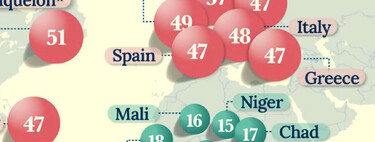
The contrast between the youngest and oldest populations globally is stark.
The Interconnectedness of Migration
The demographic dynamics of Europe and Nigeria indicate a necessary symbiosis. Europe seeks labor to fill critical vacancies, while Nigeria faces pressures related to its infrastructure and population. This migratory flow is not without its challenges, including cultural tensions and political backlash driven by rising nationalism.
As we look to the future, understanding and addressing these demographic challenges will be pivotal for both regions. While Europe grapples with aging populations, Nigeria’s youth bulge could either propel it into a new era of growth or become a source of social unrest if mismanaged.