
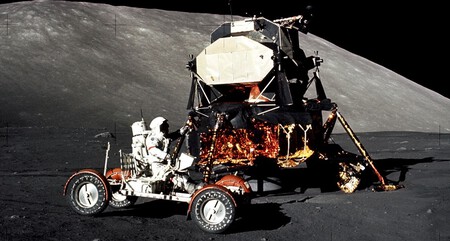
Harrison H. “Jack” Schmitt: The Scientist-Astronaut
When one thinks of astronauts today, the image that often comes to mind is of highly trained individuals equipped with advanced scientific skills, capable of enduring long missions in hostile environments. However, the criteria for astronaut selection in the 1960s were notably different. NASA primarily sought operational profiles—individuals capable of making swift decisions in unprecedented situations. This approach dominated the Apollo program until one notable exception arose: for the first and only time, a scientist was chosen to land on the Moon, profoundly influencing our understanding of lunar geology.
The Unique Selection of Schmitt
The extraordinary individual in question was Harrison H. “Jack” Schmitt. His candidacy marked a shift in NASA’s astronaut selection criteria. While many Apollo astronauts held advanced degrees, Schmitt was specifically chosen as a scientist, a distinction that set him apart in his mission. Notably, other astronauts like Buzz Aldrin, who held a doctorate, joined NASA through the typical military pilot pathway. In June 1965, NASA included Schmitt in a special group (Group 4) crafted to recruit scientists, ultimately leading him to be the sole scientist on a moon landing mission: Apollo 17.
Schmitt’s Geological Background
Prior to joining NASA, Schmitt had a solid foundation in lunar science. In 1964, he became part of the Astrogeology team at the Flagstaff Science Center after earning his doctorate from Harvard. His work involved lunar geological mapping and spearheading the Lunar Field Geological Methods project. This solid geological background made him uniquely qualified for the Apollo program. Beyond flying, he contributed significantly by training astronauts, helping to develop necessary hardware, and overseeing preparations for critical missions.
The Apollo 17 Mission: More Than Just a Landing
Apollo 17 was not merely another mission; it was NASA’s last “J-type” mission, characterized by enhanced equipment and scientific objectives. The Taurus-Littrow valley, chosen for exploration, harbored rocks that were both older and younger than those collected during prior missions. This mission not only aimed to meet the operational aspirations of NASA but also to conduct substantial scientific investigations.
Experience Matters
In an interview with the Japanese space agency JAXA, Schmitt emphasizes the invaluable experience that specialists bring to missions. While NASA trained pilot astronauts to observe and problem-solve, Schmitt asserts, “there is no substitute for experience.” Having a seasoned geologist on-site enhanced decision-making concerning sample collection and environmental interpretation, critical factors on the lunar surface.
Discoveries on the Moon
One of the highlights of Apollo 17 was the discovery of “orange soil” by Schmitt and fellow astronaut Eugene Cernan. This finding was high-stakes for lunar science, as it was identified as volcanic glass or pyroclastic material, indicating ancient explosive volcanic activity on the Moon. This discovery aligned perfectly with the mission’s objective to uncover diverse geological materials.
A Singular Journey
Schmitt’s story is compelling not just as a biographical note; it serves as a mirror reflecting the priorities of the Apollo program. Despite the inclusion of scientists in their ranks, the program overwhelmingly favored astronauts with operational experience for lunar missions. From over 1,000 applicants, only six were selected for Group 4, and only Schmitt proceeded to the Moon.
The Legacy of Schmitt’s Mission
Schmitt’s unique achievements underscore the importance of integrating scientific expertise in space exploration. As we look towards future missions, such as NASA’s Artemis program, the lessons learned from Apollo 17 will guide the balance between operational capabilities and scientific understanding. The impending return to the Moon raises critical questions: Will our goals remain focused on exploration, or will we broaden our horizons to embrace comprehensive scientific inquiry once again?