
“There’s no train coming.”
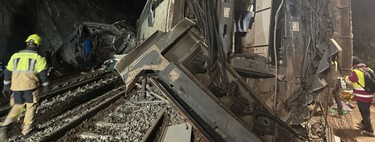
This pivotal phrase originates from a leaked audio recording published exclusively by elDiario.es, capturing the conversation between the driver of the Iryo train and the command post. This audio, extracted from the black box of the Italian train, reveals crucial details about a catastrophic incident where the Iryo derailed and was subsequently struck by an opposing Alvia train, leading to a violent descent down a four-meter embankment.
Audio and Its Implications
The leaked audios indicate that the Iryo train’s driver communicated with the command center in Atocha, reporting a “hitch” on the track. He was instructed to lower the pantographs, crucial components that connect trains to the electrical network. The driver confirmed that he had executed this operation.
When a hitch occurs—often due to issues with the pantographs or catenary—the train experiences a sudden stop, likened to an anchor halting progress. In the recorded conversation, the driver states that his train is entirely blocked.
After this point, the communication halts, but it’s noted that the driver promptly informs Atocha about the derailment and indicates that he is occupying the adjacent track. Alarmingly, during this transmission, he requests an immediate halt to train traffic and calls for emergency services due to injuries and a fire on board.
The audio concludes with the driver announcing his evacuation from the cabin, but notably, it does not reference the Alvia train, which allegedly collided with the Iryo. This raises significant questions about situational awareness among both the driver and the command center.
Two Competing Theories
Currently, we are left with speculation. One theory suggests that the Alvia’s impact occurred almost immediately after the Iryo’s derailment—potentially causing a minimal yet critical collision that the Iryo driver did not perceive amidst his efforts to handle the emergency. The substantial speed of over 200 km/h could explain why the two trains ended up 700 meters apart.
Transport Minister Óscar Puente posits that there could have been only nine seconds between the Iryo’s derailment and the Alvia’s impact, thereby explaining the driver’s unawareness of the collision. This timeline challenges earlier assertions of a 20-second gap, which would have been sufficient for safety systems to activate an emergency stop.
However, another theory suggests the possibility that the Alvia had yet to reach the accident zone when the Iryo driver first contacted the command post. Indicating two recent communications—three to four minutes apart—this theory insists that the Alvia would have been located more than 13 kilometers away, a distance unmanageable at high speeds.
Systemic Communication Failures
The LZB system utilized for train communication is critical in this incident. It continuously relays train positions to a command center, where a designated manager monitors each train’s location. Possibilities of systemic failure arise: the Alvia might have sent its positional update just after the collision, leading the command to mistakenly believe no opposing train was en route. Alternatively, technical issues could have disrupted signal communication, hiding the Alvia’s presence entirely.
All these avenues remain deeply speculative. Official investigations are ongoing to clarify this troubling event, with authorities expressing grave concern over the leak of sensitive audio and implications that may arise.
In conclusion, the complexities surrounding this tragic train collision highlight not only the importance of real-time communication but also the need for rigorous safety measures in railway systems.