
Toyota’s New Flagship: The bZ7 Electric Sedan
After unveiling the bZ7 at the Shanghai Motor Show last year, Toyota officially presents this impressive electric sedan, measuring over five meters in length. What sets the bZ7 apart is not solely its design, but the innovative technology that drives both its software and drivetrain—technology that notably comes from Huawei.
The Specifications of the bZ7
The bZ7 showcases advanced features for the electric vehicle market. Here’s a brief overview of its specifications:
- Dimensions: 5.1 meters long and 1.9 meters wide.
- Battery: LPF (lithium ferrophosphate) batteries sourced from BYD.
- Autonomy: Offers a range of 600 to 800 km depending on the version (using the Chinese CLTC cycle).
- Operating System: Utilizes Huawei’s HarmonyOS.
- Powertrain: Powered by the Huawei DriveOne system.
Huawei’s Role in the bZ7
Huawei made a significant commitment to the electric vehicle sector in 2020 with its DriveOne technology. This control unit integrates various components like the motor, reducer, converter, and power distribution unit, enabling the bZ7 to achieve a power output of 278 HP and a top speed of 180 km/h. This compact platform is a leap forward compared to traditional vehicle architectures.
Luxurious Interior Features
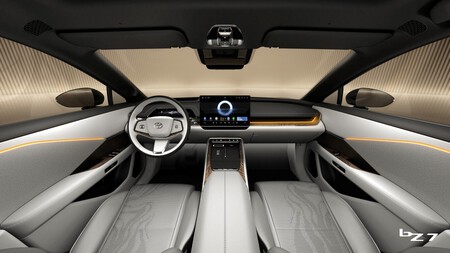
The bZ7’s interior is designed with a luxurious touch, featuring a 15.6-inch floating central screen. This size rivals that of a generous laptop, enhancing the user experience within the vehicle.
This Operating System: HarmonyOS
HarmonyOS is a versatile platform developed by Huawei that integrates not just for electric vehicles, but also for smartphones, tablets, and more. It allows for seamless functionality across various devices, providing a cohesive experience.
Strategic Alliance: Toyota and Huawei
The collaboration between Toyota and Huawei is relatively new. As the Japanese automotive giant faced declining sales in China—dropping 6.9% in 2024 after three years of decline—the partnership aims to bolster its strength in the electric car market. By aligning with Huawei, known for its robust technology, Toyota seeks to revitalize its offerings in the competitive Chinese EV sector.
An Edge Over Apple and Google
One of the standout features of Huawei’s approach is its operating system integration. Unlike Apple CarPlay and Android Auto, which depend on smartphones, HarmonyOS allows full control of the vehicle from the system itself. This streamlined experience is enhanced by Over-The-Air (OTA) updates and a proprietary codebase, making it a highly integrated solution.
Both Apple CarPlay Ultra and Google’s Android Automotive strive for similar capabilities, yet these systems have seen limited adoption. The bZ7 represents a strategic move toward comprehensive technology solutions for the automotive sector, promising a more self-reliant interface for drivers.
As Toyota continues its mission to innovate within the electric vehicle space, the bZ7, powered by Huawei’s cutting-edge technology, marks a significant step forward in its endeavors. This partnership not only allows Toyota to rethink its approach to electric vehicles but also positions both companies strategically in a burgeoning market.