
Disney and the Future of Robotics
For decades, Disney has been a pioneer in bringing its characters to life through animatronics, a classic part of its theme parks that creates the ‘magic’ that dazzles children and adults alike. Recently, Disney has been advancing its technology, working on incorporating artificial intelligence (AI) into robotics to enhance the authenticity of the experiences it offers. A prime example of this innovation is the announcement of Olaf, the lovable snowman from Disney’s Frozen, set to become the first fully autonomous robotic character in Disney parks worldwide.
The Advent of Olaf in Disney Parks
Olaf is scheduled to debut in the parks of Hong Kong and Paris in 2026. This won’t just be another basic automaton; Disney engineers are utilizing reinforcement learning and cutting-edge robotics to develop a character that moves and interacts in a way that mirrors the beloved film. This capability blends advanced technology with a cherished Disney character, likely attracting even more visitors to its theme parks.
A Controlled Environment for Experimentation
The setting of theme parks provides Disney with a controlled environment where robots can interact with thousands of people daily. These environments not only allow for real-time interactions but also enable the robots to learn and improve their behaviors under supervised conditions.
Overcoming Technical Challenges
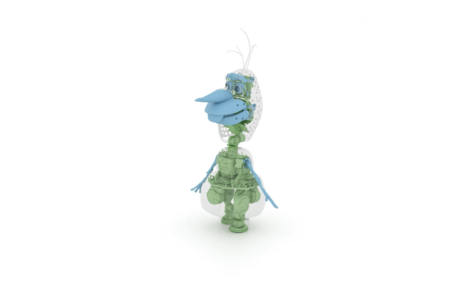
Creating a character like Olaf is fraught with challenges due to his unconventional design. His large head is supported by a tiny neck, and his small feet lack visible legs. To navigate these obstacles, the engineering team has developed an ingenious system with asymmetrical legs concealed under a polyurethane foam “skirt.” This skirt simulates Olaf’s fluffy snow body and absorbs impact while allowing smooth movement without breaking the visual illusion.
Expressiveness Through Mechanical Design
Every facial joint on Olaf, from his eyes to his mouth, features intricate control mechanisms that provide him with a lifelike expressiveness. This detailed mechanical design keeps the smaller actuators hidden under Olaf’s disguise, ensuring seamless interactions with park guests.
The Power of Reinforcement Learning
A significant aspect of Olaf’s development lies in the utilization of reinforcement learning, rather than traditional programming techniques. As noted by Kyle Laughlin, senior vice president of Walt Disney Imagineering, using this advanced method allows for processes that once took years to develop to be completed in days or weeks. The team creates millions of simulations where Olaf learns to walk, maintain balance, and express personality, mimicking how a child learns to move.
Addressing Acoustics and Thermal Dynamics
Technical challenges go beyond movement. The sound produced by Olaf’s mechanical steps was initially too noisy, prompting engineers to introduce rewards that penalize rapid changes in foot movement. As a result, they’ve successfully reduced the footfall noise from 82 dB to 64 dB.
Moreover, managing thermal dynamics was crucial, as Olaf’s design incorporated small actuators within a thin neck that must support his larger head. A real-time thermal model integrated into the AI system helps manage overheating by adjusting posture to reduce torque when temperatures approach critical limits.
Collaboration and Future Innovations
A collaborative effort among NVIDIA, Google DeepMind, and Disney led to the creation of a physics engine named Newton, designed to accurately simulate how robots interact with various objects. This technology is pivotal for characters like Olaf and aims to facilitate the training of more advanced, autonomous robots in the future.
Roadmap to Future Developments
Disney’s advancements with autonomous characters like Olaf mark only the beginning. Following the introduction of bipedal BDX droids, the company has outlined plans for investing $60 billion over the next decade to introduce more interactive attractions across its theme parks.
Data-Driven Improvements
As these robots interact with guests on a daily basis, they generate substantial data that can be used to refine their behaviors and performances. This data-driven approach positions Disney not only as a leading player in the robotics field but also as a potential ally for robotics startups looking to gain traction in the industry.
Disney’s foray into AI-powered robotics signals a bright future for entertainment and technology, transforming theme parks into testing grounds for the next generation of interactive experiences.